Kepler bags first rocky exoplanet
The first rocky exoplanet has been discovered by NASA's
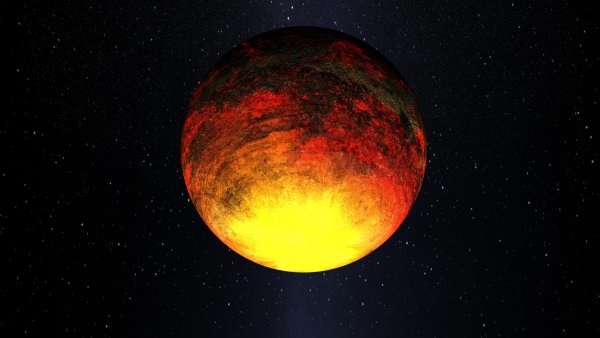
Kepler-10b is about 20 times closer to its host star than Mercury is to the Sun – and as a result its surface temperature is expected to be as high as 1400 °C. It always shows the same side to its star and is likely to have oceans of molten rock on its day side and a solid night side, according to Batalha. It has an
Since the discovery of the first
Three key measurements
Kepler-10b, however, is a very different case because its star is very old – about 8 billion years – which means that it is very quiet and much easier to deal with. The team determined the planet's density by making three different observations. First, they determined its radius relative to the star's by measuring how much light it blocks when it transits between Earth and its star. Then they determined its mass (again relative to its star) by measuring the wobble of the star caused by the orbiting planet. The final, and crucial step was to determine the radius and mass of the star itself, which was done by measuring the
Putting it all together the team believes that the planet’s density is about 8.8 g/cm3, which is on par with Mercury
"This is the first unquestionably rocky planet," said Batalha today the
Night and day temperatures
Batalha said that the Kepler team is now studying a possible modulation in the amount of light that reaches the telescope during the planet's transit. This could allow the researchers to determine the temperatures of the day and night surfaces of the planet. While Kepler-10b is similar to Earth in some ways, it is not within the
One mystery surrounding Kepler-10b is how it managed to get so close to its star.