New type of supernova outshines the rest

A new type of supernova that shines up to 10 times brighter than any previously recorded has been discovered by an international team of astronomers. However, the team has yet to explain the exact mechanism that drives this new type of exploding star, with existing models failing to reproduce the radiation emanating from this new class of violent events.

Supernovae – highly energetic events caused by the explosion of a star – can often shine brighter than an entire galaxy for a brief period of time. To date, three mechanisms have been used to explain the vast amount of associated radiation observed by astronomers during these events. However, a team led by Robert Quimby at the California Institute of Technology in the US has identified a batch of six supernovae with radiation properties that cannot be explained by any of the three mechanisms.

The first cause discounted by Quimby was radioactive decay. During the highly energetic explosion of a supernova the temperature skyrockets. This allows heavy elements, including 56Ni, to be synthesized. Their subsequent radioactive decay produces gamma-rays that slow down the rate at which the supernova fades away. Crucially, the explosions observed by Quimby were too short-lived. "These supernovae faded about three times as quickly as those driven by radioactive decay," he explains.
Glowing hydrogen

A second possibility is that surrounding hydrogen-rich material is heated by the energy of the explosion, causing it to radiate light. This hydrogen could have been blown off the stars at an earlier time by stellar winds. However, Quimby could not find any evidence of hydrogen. "No traces were found when we analysed the spectral lines of these supernovae. This meant we were able to rule out an interaction with hydrogen-rich circumstellar material," he says.

The elimination of hydrogen also discounted the third conventional mechanism. In this scenario the hydrogen in the atmosphere of the star is ionized as the explosion tears through it. This fog of ionized hydrogen is opaque to radiation. Over time the hydrogen recombines, the fog clears and the radiation streams outwards. But again, as no hydrogen was observed, this cannot easily explain Quimby's pool of six supernovae.

Instead, this latest research puts forward two alternatives that could explain the sextet. The first is a similar process to the heating of hydrogen-rich material surrounding the star. "Some very massive stars, around 100 times more massive that the Sun, could throw off shells of carbon and oxygen instead," Quimby explains. "If a supernova explodes within a shells, it would heat the shell up." As the shells expand and cool, the supernova gradually fades away.

Rotating neutrons

Quimby's second suggestion invokes magnetars. When a massive star dies in a supernova, it can leave behind a superdense, rapidly rotating bundle of neutrons – a neutron star. If this neutron star is highly magnetized, then it is called a magnetar. The interaction of the intense magnetic field with the surrounding ionized material could be behind the mystery supernovae. "The interaction acts as a brake, slowing down the spinning of the magnetar – a process that releases some of its rotational energy into the supernova ejecta," Quimby says. "This could supply an additional source of energy that would make it brighter than a normal supernova."

However, Quimby does not believe he has everything wrapped up just yet. "These ideas are brand new; they didn't exist 10 years ago. We definitely need to do more work to figure this out," he says. Rubina Kotak, a supernova expert at Queen's University, Belfast, who was not involved in the research, also believes it is tricky. "It is really difficult to say what is powering these explosions as we've only seen a handful of them and we don't have complete observations over the whole event," she told physicsworld.com. "We are all waiting for the next one, which hopefully we can catch early enough to monitor all aspects of it."

Meanwhile, Quimby is using the Hubble Space Telescope (HST) to probe the known supernovae further. "I am using the HST to look at their ultraviolet spectra," he explains. "Hopefully, we can get a better idea of what materials are in the ejecta and place better constraints on how the events evolve over time. This could allow us to work out which of our models is applicable."

خلقت و وجود خدا با فیزیک جدید قابل تبیین نیستند

استاد فلسفه کالج سنت اولاف مینه‌سوتای آمریکا معتقد است: پرسشهای مهم درباره خلقت و جهان هستی با فیزیک جدید قابل پاسخ نیستند. علت این است که خداوند از جنس ماده و انرژی نیست. دکتر چارلز تالیافرو استاد کالج سنت اولاف مینه‌سوتای آمریکا و فیلسوف دین معاصر در مورد اظهارات اخیر استفن هاوکینگ فیزیکدان معاصر مبنی بر مرگ فلسفه و عدم پاسخ این حوزه به سؤالات جدید بشر و توان علم در پاسخ به چرایی هستی به خبرنگار مهر گفت: فلسفه زنده و پویا است. تردید دارم که هاوکینگ در مورد فلسفه معاصر چیز زیادی بداند.

وی افزود: اظهارات هاوکینگ بیان فلسفه عجیب و غریب وی است. آیا هاوکینگ می‌تواند فرض کند که فیزیک جدید می‌تواند به این سؤال که ما چرا اینجا هستیم پاسخ دهد؟ و یا می‌تواند به این پرسش که ما از کجا آمده‌ایم پاسخی دهد. مؤلف "راهنمای آکسفورد درباره الهیات" تأکید کرد: به نظر من این پرسشها خارج از قلمرو علوم هستند و پاسخ به آنها از طریق علوم میسر نیست. برای پاسخ دادن به این پرسشها یک راه ابتنای پاسخها بر اساس فلسفه طبیعی و الهیات است.

وی تصریح کرد: بر اساس طبیعت گرایی هیچ قدرت مافوق بشری و غیر طبیعی وجود ندارد که جهان مبتنی بر آن باشد. بر اساس این دیدگاه خدایی که در همه جا وجود داشته باشد و جهان را خلق کرده باشد وجود ندارد. استاد پیشین دانشگاه آکسفورد در ادامه گفت: اشکال گوناگون طبیعت گرایی ادعا می‌کنند که ارزشها و اهداف انسانی باید به وسیله زیست شناسی تکاملی پاسخ داده شوند. آنها معتقدند که این زیست شناسی تکاملی می‌تواند به ارزشها و اهداف انسانی پاسخ دهد.

تالیافرو افزود: تقریباً همه اشکال طبیعت گرایی منکر وجود خدا هستند و معتقد نیستند که جهان را خدا خلق کرده است. هم طبیعت گرایان و هم الهی دانان پاسخها و دلایلی برای ادعاهای خود دارند. آنچه مسلم است چنین پرسشهای مهمی درباره خلقت و جهان هستی با فیزیک جدید قابل پاسخ نیستند. مؤلف "راهنمایی مقدماتی بر زیبایی شناسی" یادآور شد: علت این است که خداوند از جنس ماده و انرژی نیست. همچنین وقتی می گوئیم خدا نمی‌توان آنرا به چیزی فیزیکی ارجاع داد. برای آنکه بتوان به پرسشهای مربوط به خدا پاسخ داد و یا آنرا مورد بررسی قرار داد باید فلسفه طبیعت و یا شاید فلسفه علم را خواند و مطالعه کرد.

هاوکینگ در همایش زمان گوگل مدعی شد پرسشهای بنیادین درباره ماهیت و سرشت جهان بدون در نظر گرفتن داده‌های سخت افزاری قابل حل نبوده است. این داده‌ها از شتاب دهنده بزرگ ذرات و تحقیقات علوم فضایی به دست می‌آیند. وی اظهار داشته که فلسفه مرده است و نتوانسته مانند علوم مدرن و به ویژه فیزیک پیشرفت کند.

Physicists create a living laser

To date, lasers have been built from inanimate materials, such as purified gases, synthetic dyes or semiconductors. But now physicists in the US have shown how to induce lasing in a single living biological cell. By shining intense blue light onto fluorescent protein molecules in a cell, the team made the molecules generate intense, monochromatic, directional green light. This phenomenon could potentially be used to distinguish cancerous cells from healthy cells, claim the researchers.

The material used in the latest work is the green fluorescent protein (GFP), which is found in the jellyfish Aequorea victoria and has been used to image live cells since the 1960s. By combining the gene that encodes GFP with the DNA of any other protein, the GFP can be attached to that protein. The light it gives off can then be used to track the protein in living cells.

The natural fluorescence of GFP is incoherent, just like the light emitted by a normal light bulb. But physicists Malte Gather and Seok Hyun Yun, at the Massachusetts General Hospital and Harvard Medical School in Boston, thought it might be possible to amplify the protein’s light and so build a biological laser. A tantalizing prospect because almost any organism, from a bacterium to a cow, can be programmed to synthesize GFP.

Between two mirrors

Gather and Yun put human embryonic kidney cells into a Petri dish and then added the DNA that encodes for GFP to the cells. They then attached a drop of solution containing these re-programmed cells onto a mirror with a diameter of about 3 cm. They placed another, equal-sized, mirror above the solution, leaving a gap of about 200 μm between the mirrors. They then focused nanosecond-long blue laser pulses onto the space between the mirrors and moved the mirrors around, with the aid of a microscope, until they were able to shift a single cell into the beam's focus.

With the cell in place, the researchers gradually increased the power of the blue laser and watched how the green fluorescence changed as a result. Above a certain threshold – when the blue pulses had an energy of about 1 nJ – the energy of the emitted green light increased sharply and its spectrum narrowed to just a few well-defined peaks. This, the researchers say, is a clear signature of lasing because above this threshold there are enough protein molecules in an excited state to generate stimulated rather than spontaneous emission. The emitted green light is amplified as it bounces back and forth between the mirrors, as occurs in a conventional laser cavity.

Gather says that, to the best of his knowledge, this is the first time that a laser has been made from a living material. He mentions that scientists have previously mixed dead tissue with inorganic laser materials and seen coherent emission from the composite. But this latest material is made entirely from living tissue, and this remains alive even after emitting hundreds of laser pulses.

Searching for cancer

Gather believes that the latest work could eventually have important practical applications. Conventional machines, called cytometers, that analyse large numbers of cells usually provide just one parameter for each cell – brightness. More can be learned by studying cells under a microscope, but the long exposures required mean that this is a time-consuming process. In the GFP cell-laser, variations in intercellular structure, which introduce slight changes to the refractive index of the cell, alter both the spatial output of the laser light and its spectrum. Gather says that this additional information "might make it easier to distinguish between a cancerous cell and a benign cell, or a cell that has become infected with a virus".

The next step, says Gather, is to shrink the mirror cavity so that it is small enough to fit inside a cell, the typical diameter of which is between 10 and 20 μm. This may then allow imaging of cell-lasers inside a living animal, rather than having to extract cells for investigation in the lab. In this case the pumping laser could be supplied either from the outside by shining it through the body or by injecting light through optical fibres inserted into the body.

However, Gather emphasizes that it is difficult to predict precisely what applications could follow and adds that the motivation for the experiment was "largely basic scientific curiosity". The researchers were trying to answer the basic question, why do lasers not exist in nature? "Some astronomers claim there are star clusters that produce coherent light," Gather says, "but as far as I know, there is nothing on Earth that does so."

Writing in a "News and Views" commentary piece to accompany the paper, Steve Meech, a chemist at the University of East Anglia in the UK, says that "it is currently unclear what applications lie in store for cellular lasers". But he adds that "whatever the eventual applications, the advent of GFP in photonics certainly marks an exciting new avenue of research for this extraordinarily versatile protein".

به نقل از وبسايت Nature

The secret lives of photons revealed

An international team of researchers has, for the first time, mapped complete trajectories of single photons in Young's famous double-slit experiment. The finding takes an important first step towards measuring complementary variables of a quantum system – which until now has been considered impossible as a consequence of the Heisenberg uncertainty principle.

In the double-slit experiment, a beam of light is shone onto a screen through two slits, which results in an interference pattern on the screen. The paradox is that one could not tell which slit single photons had passed through, as measuring this would directly distort the interference pattern on the screen. "In most science, it is possible to look at what a system is doing presently and so, determine its past or future. But in quantum mechanics, it is considered inconceivable to consider the past at all," says physicist Aephraim Steinberg of the Centre for Quantum Information and Quantum Control at the University of Toronto, Canada who has led this new research.

Now, using a technique known as "weak measurement", Steinberg and his research team say they have managed to accurately measure both position and momentum of single photons in a two-slit interferometer experiment. The work was inspired by one of Steinberg's colleagues, Howard Wiseman of Griffith University, Australia, who in 2007 proposed that it may be possible to use weak measurements to determine momenta and positions in the double-slit experiment. Steinberg was immediately fascinated and began to see how this would become experimentally viable.

Catching a glimpse

The theory of "weak measurement", which was first proposed in 1988 and developed by physicist Yakir Aharonov and his group at Tel Aviv University, Israel, has seen a fair amount of interest in recent years. The theory states that it is possible to "weakly" measure a system and so gain some information about one property without appreciably disturbing the complementary property and so the future evolution of the entire system. Though the information obtained for each measurement is minimal, an average of multiple measurements gives an accurate estimation of the measurement of the property without distorting its final outcome.

In their experiment, the researchers sent an ensemble of single photons through a two-slit interferometer and performed a weak measurement so as to imprecisely measure the momentum of each photon. This was done using a piece of calcite, which serves as a polarizer. Depending on the direction of propagation, each photon is differently polarized and the direction is measured as a function of position. This was then followed by an extremely accurate measurement of the final position of where each photon hits the "screen", which in their case was a camera. By combining the positions measured imprecisely at multiple points and the momentum precisely measured at the end for each photon, the researchers were able to accurately construct an entire flow pattern for the photons.

"This weak momentum measurement does not appreciably disturb the system, and interference is still observed. Both measurements had to be repeated on a large ensemble of particles in order to gain enough information for the whole system, but we did not disturb the outcome at all," explains Steinberg. "Our measured trajectories are consistent, as Wiseman had predicted, with the realistic but unconventional interpretation of quantum mechanics of such influential thinkers as David Bohm and Louis de Broglie."

The single photons they used in the experiment were emitted by a liquid-helium-cooled InGaAs quantum dot that is optically pumped by a laser; this was specially developed at the National Institute for Standards and Technology in Colorado, US. The dot then emitted single photons at a wavelength of 943 nm.

Past, present and future

The double-slit experiment heavily influenced the principle of complementarity devised by Niels Bohr. Complementarity states that observing complementary variables, such as the particle-like trajectories and the wave-like interference in the double-slit experiment, depends on the type of measurement made – the system cannot behave as both a particle and wave simultaneously. Steinberg's recent experiment suggests this does not have to be the case – the system can behave as both.

So would either Einstein or Bohr be pleased or surprised that this seemingly impossible measurement has been made? "Well, I don't think that Einstein would be surprised at all! But at the same time I do not think that this would make him more comfortable with the quantum mechanics of single systems," says Steinberg, explaining that Einstein was eager to accurately measure all the parameters of a single quantum system, something that we are not capable of just yet. "Bohr is a different matter, I doubt that his contemporaries even understood exactly what he was trying to say," says Steinberg. "But maybe this measurement would make him [Bohr] slightly more careful with his language while talking about complementarity."

New technique narrows electron dipole moment

Measuring a fundamental property that the Standard Model of particle physics says should be zero might seem like the ultimate waste of time. But if the electron does have a non-zero electric dipole moment (EDM), it would have profound implications and point to new physics. Now, Jony Hudson and colleagues at Imperial College London have made the most precise measurement of the EDM yet, reducing its known upper limit by about 50% – and providing more evidence that it is either zero or extremely small.

The Standard Model, in its simplest form, prohibits the electron from having an EDM because this would violate time-reversal symmetry. While more sophisticated versions of the Standard Model do allow for an EDM, they nevertheless suggest it would be much too small to measure in the lab. Although Hudson's team has only been able to put an upper limit on the EDM, it claims the new technique could be refined to search for an EDM 100 times smaller still.

Polarized molecules

In their method, the researchers studied the outer (or valence) electrons in ytterbium monofluoride (YbF) molecules. The molecules are exposed to an electric field, which polarizes the molecules. This polarization creates a very large local electric field in the vicinity of the valence electrons. If the electrons have an EDM, then they too would be polarized by this large local field.

But instead of seeking to measure a tiny EDM directly, Hudson and colleagues tried instead to measure the effect that the polarization would have on the electron energy states of the molecules. They began with a pulse of ultracold molecules that had been set into a superposition of two quantum states. The molecules were passed between two parallel plates where electric and magnetic fields can be applied. The molecules are then detected as they emerge from the plates.

In the presence of just a magnetic field, the relative phase of the two quantum states is rotated. Varying the strength of the magnetic field causes quantum interference between the two states and the result is a series of interference fringes at the detector.

Switching the electric field on should only affect this interference pattern if the electron has an EDM because this would introduce a separate phase rotation. To test for this, the team looked for changes in the interference pattern that were correlated to changes in the applied electric field. This was done for 25 million pulses of YbF and found no evidence of a phase shift related to an EDM.

Less than a hair's width

This allowed the team to place an upper limit on the EDM of 10.5 × 10–28 e cm with 90% confidence. According to the researchers, this means that if the electron were magnified to the size of the solar system, its EDM would be no bigger than the width of a human hair.

This is about 50% better than previous measurements using thallium atoms and the team believes that it could soon improve the result by as much as a factor of 100. The researchers are currently trying to cool the YbF molecules to even lower temperatures and gain better control of the pulses as they pass through the experiment.

چرا ما در سه بعد زندگي مي‌كنيم؟

آيا اينكه زمين ما سه بعد دارد، اتفاقي است يا بايد برايش دنبال يك تعبير عميقتر گشت؟ بعضي از تئوريسين‌ها معتقدند كه فضاي به وجودآمده بر اثر انفجار بزرگ، تنها به صورت اتفاقي از سه بعد تشكيل گشت و ممكن است قسمتهاي ديگري از جهان هستي وجود داشته باشند كه ابعادشان متفاوت باشد.
مثلاً هيچ دليل منطقي نمي‌توان يافت براي پاسخ به اين سوال كه چرا مثلاً جهان هستي فقط دو بعد ندارد. چندصد سال پيش، ادوين آبوت اثري به نام "زمين مسطح" نوشت كه در آن جهاني دوبعدي را تصوير كرد. جهاني كه در آن اجسام و موجودات حيات خود را تنها بر روي "سطح" ادامه مي‌دادند. اما فيزيك جهان دوبعدي با فيزيك جهان ما بسيار متفاوت خواهد بود. براي مثال در فضاي دو بعدي، امواج به شفافيت انتشار در فضاي سه بعدي، پخش نمي‌شوند و باعث ايجاد انواع مشكلات در سيگنال‌رساني و انتقال اطلاعات مي‌گردند. و نيز از آنجايي كه زندگي آگاهانه، به فرآيند انتقال درست و صحيح اطلاعات بستگي دارد، در نتيجه اين تفاوتها كافي خواهند بود براي اينكه مشاهدات ما را تنها در حد مناطقي ناشناخته محدود نگاه دارند.

تصور كردن فراتر از سه بعد نيز مشكلات مختلفي به همراه خواهد داشت. در چنين حالتي، سيستمهاي نجومي و سياره‌يي غيرممكن مي‌شوند چرا كه عكس قانون جاذبه يعني قانون قدرتهاي افزايشي به وجود خواهد آمد. در نتيجه به نظر مي‌رسد كه جهان سه بعدي تنها جهاني است كه وجود دارد و فيزيكدانها مي‌توانند درباره‌اش بنويسند. اما نكات ريزي وجود دارد كه باعث مي‌شود اين فرضيه با شك و ترديد همراه باشد.

شايد فضا سه بعدي نيست و تنها اينگونه براي ما نشان داده مي‌شود. شايد فضا ۹ يا ۱۰ بعد دارد و حتي ابعاد بيشتر! برخي از تئوريهايي كه قصد يكپارچه‌سازي نيروهاي طبيعت را دارند مانند فرضيه‌ي فرا-رشته‌يي، امكان وجود تعداد ابعاد بيشتري نسبت به آنچه كه ما مي‌بينيم را رد نمي‌كنند.
دليلشان نيز اين است كه بسياري از معادلاتي كه براي توصيف وضعيت موجود به كار مي‌روند، با در نظر گرفتن تعداد بيشتر ابعاد، نتايج بهتري مي‌دهند! در نتيجه نمي‌توان آن را كاملاً بي‌معني دانست. ابعاد اضافي فضا، سابقه‌ي حل بسياري از مشكلات و مسايل حل‌ناشدني فيزيك را دارند. براي مثال اينشتين براي توصيف كردن جاذبه، به يك بعد اضافي نياز داشت و آن، زمان بود. و تئودور كالوتزا نيز يك بعد به سه بعد اثبات شده اضافه كرد چرا كه مي‌خواست نظريات جاذبه را با فرضيات ماكس‌ول در مورد الكترومغناطيس، همگون سازد.

مطمئناً ما نمي‌توانيم بعد چهارم را ببينيم اما اين هم احتمالاً يك دليل دارد. اين بعدهاي اضافه، مي‌توانند بسيار كوچك و فشرده شوند. يك لوله‌ي پليمري آب را از دور در نظر بگيريد. مانند يك خط دراز و معوج به نظر مي‌رسد. از يك بعد نزديكتر آن را نگاه كنيد. به شكل تيوب يا لوله ديده مي‌شود. اما آنچه كه در حقيقت اين لوله را مي‌سازد، يك سطح دايره‌يي شكل كوچك است كه دور محيط لوله چرخيده است. به طور مشابه، بعد چهارم نيز مي‌تواند چنين لوله‌يي باشد كه دور فضاي سه‌بعدي مي‌چرخد اما آنقدر كوچك است كه ديده نمي‌شود.

در نتيجه تصور كردن ابعاد بسيار زيادتري كه اينگونه در فضا پنهان‌ شده‌اند، به راحتي ممكن است. اما متاسفانه نظريه‌ي فرا-رشته‌يي هنوز دقيقاً سه بعد گشوده‌شده را تاييد نمي‌كند در نتيجه براي تصور ما نسبت به جهان هستي هم تعريف درستي نمي‌توان ارايه داد.
اما براي تصور كردن يك بعد جديد، راههاي ديگري هم هست. فرض كنيد نيروهاي فيزيكي بتوانند نور و جسم را به يك صفحه‌ي سه‌بعدي مسطح يا ورقي‌شكل تقليل دهند و محدود كنند در حالي كه به برخي پديده‌هاي ديگر فيزيكي اجازه مي‌دهند تا وارد بعد چهارم شوند. ساكن شدن سطوح دو بعدي به جاي اجسام سه‌بعدي در فضاهاي مشخص باعث مي‌شود تا هر جسم و پديده‌يي به شكل طرح و نقشه‌اش نشان داده شود. مثلاً ما يك توپ كره‌يي شكل را به صورت دايره ببينيم! به طريق مشابه، ممكن است ادعا شود كه ما در حال حاضر تنها تصويري سه بعدي از اجسام و مفاهيمي را مي‌بينيم كه در واقع چهاربعدي هستند.

اما فضاي "سه لايه‌يي" ما مي‌تواند تنها در چهار بعد نيز محدود نشود. لايه‌هاي قابل كشف ديگري نيز مي‌توانند وجود داشته باشند كه در فضاي چهاربعدي حضور دارند. اثبات اين فرضيه، انجام آزمايشهايي تازه را مي‌طلبد كه وجود بعد چهارم را نيز به ما نشان دهد. اما اين نظريه وجود دارد كه برخورد لايه‌هاي چندبعدي در مقياسهاي اين‌چنيني مي‌تواند به تكرار شدن "انفجار بزرگ" منجر گردد در نتيجه حضور ما بر روي كره‌ي زمين شايد اصلاً مويد همين مطلب باشد كه فضا واقعاً سه‌بعدي نيست!

پارادوکس خورشید جوان کم سو

ناسا می‌گوید پارادوکس خورشید جوان کم‌سو هنوز حل نشده است!

سال‌ گذشته دانشگرانی ادعا کردند که پارادوکس خورشید جوان کم‌سو را حل کرده‌اند اما در اشتباه بودند و اکنون پارادوکس بازگشته است و معمایی‌تر شده است.

روی زمین سنگ‌هائی وجود دارند که عمرشان به ۳.۸ میلیارد سال پیش – کمی‌ پس از شکل‌گیری‌ی زمین – می‌رسد و به‌نظر می‌آید در اثر واکنش‌هائی که با آب سروکار دارد به‌وجود آمده باشند. به این ترتیب به‌نظر می‌رسد که آب مایع از 8ر3 میلیارد سال پیش روی زمین جریان داشته است. اما در دهه‌ی 1970 میلادی ستاره‌شناسان به این نکته اشاره کردند که در آن زمان خورشید 30درصد از امروز کم‌سوتر بوده و گرمایی که به زمین می‌رسیده برای مایع نگه‌داشتن آب کفایت نمی‌کرده است.

اما کسی چندان نگران این مشکل معروف به "پارادوکس خورشید جوان کم‌سو" نبود. جواب‌های آشکار وجود دارند مثلاً این‌که‌ زمین در آن زمان گرم‌تر بوده زیرا گرمای کم‌تری بازمی‌تابانده، سفیدی1‌ش کم‌تر بوده یا درگیر اثر گل‌خانه‌ای‌ی بی‌مهار بوده است. یکی از این توجیه‌ها باید درست باشد اما کسی نمی‌دانست کدام‌یک.

سال گذشته گروهی از پژوهشگران ادعا کردند که جواب پارادوکس را پیدا کرده‌اند آنها گفتند که نمونه‌ی سنگ‌های آن دوران نشان می‌دهد که غلظت گازهای گل‌خانه‌ای مانند متان و کربن‌دی‌اکسید در جو آن زمان زیاد نبوده بنابراین باید نتیجه گرفت که زمین سفیدی‌ش کم‌تر بوده و در نتیجه گرمای‌ بیشتری از خورشید جذب می‌کرده است. آنها استدلال ‌کردند که ذراتی که خاستگاه زیستی داشته باشند در جو کم‌تر بوده و این ذرات به‌صورت هسته‌هائی برای شکل‌گیری‌ی قطره‌های آب عمل می‌کنند در نتیجه ابر کم‌تری در آسمان وجود داشته است: سفیدی‌ی زمین کم‌تر بوده و نور بیشتری از خورشید جذب می‌کرده. این پژوهشگران کار پژوهشی‌شان را در نیچر ‌چاپ کردند و به‌نظر می‌رسید مسئله حل شده است. (سال پیش سازوکارهای دیگری که شاید مانع از شکل‌گیری‌ی ابر می‌شده است نیز بررسی شد).

اما امروز کالین گولدبلات و کِوین زانل از مرکز پژوهشی‌ی اِیمز2 ناسا در مافِت‌فیلد3 دوباره تنور بحث را داغ کرده‌اند. آنها تأثیر شمار کم‌تر ابرها را بررسی کرده‌اند و می‌گویند هر طور حساب و کتاب کنید میزان گرمائی که به زمین می‌رسیده آن‌قدر نبوده است که آب را مایع نگه دارد[3]. ابر دو اثر دارد: ابرهائی که در ارتفاعات بالا هستند گرما را گیر می‌اندازند و ابرهای کم‌ارتفاع نور را بازمی‌تابانند بنابراین کران بالای مطلق برای اثر گرمایشی ابرها هنگامی به‌دست می‌آید که تمام ابرهای کم‌ارتفاع را حذف کنید. اما وقتی درمدل کامپیوتری آب‌وهوای زمین در آن دوران این تغییر را وارد کنید بیش از نیمی از گرمائی را که برای مایع نگه‌داشتن آب روی زمین لازم است به دست نمی‌آورید. گولدبلات و زانل می‌گویند که در مقاله‌شان نشان داده‌اند که حتی با قوی‌‌ترین فرض‌های قابل‌قبول در باره‌ی کاهش ابرها و سفیدی‌ی‌ سطح زمین یک ضریب 2 برای توضیح پارادوکس کم می‌آید.

بنابراین پارادوکس نه‌تنها از بین نرفته بلکه معمائی بزرگ‌تر شده است. سال پیش کشف کردیم که اثر گل‌خانه‌ای پاسخ‌گو نیست و اکنون می‌دانیم که سفیدی‌ی کم‌تر نیز از پس جواب برنمی‌آید. فکرتان را به کار بیاندازید!

نظريه ريسمان بيان مي كند كه انفجار بزرگ سرمنشأ عالم نیست

نظريه ريسمان بيان مي كند كه انفجار بزرگ سرمنشأ عالم نبوده، بلكه صرفاً پيامد وضعيتي بوده كه مدت ها قبل از آن زمان وجود داشته است. زيرا غالب كيهان شناسان مطرح كردن زماني قبل از انفجار بزرگ را مانند اين مي دانستند كه كسي جايگاه شمال قطب شمال را از شما بپرسد.

يونانيان باستان دربارة منشأ زمان مناظرات و مباحثه هاي فراواني ترتيب مي دادند. ارسطو كه از بي آغازي زمان طرفداري مي كرد،استنادش بر اين اصل بود كه از هيچ ،چيزي به وجود نمي آيد. پس اگر عالم در هيچ برحه اي از زمان نتوانسته باشد خود را از نيستي به هستي در آورد، الزاماً مي بايست همواره وجود مي داشته است.

پس به اين دليل و دلايلي ديگر، زمان بايد به طور نامحدود در گذشته و آينده امتداد داشته باشد. امّا دين شناسان مسيحي نظري دگرگونه داشتند.آگوستين استدلالش بر اين بود كه آفريدگار بيرون از فضا و زمان حضور دارد و قادر است كه اين ساختارها را همانطور كه ديگر جنبه اي دنياي ما را خلق می كند، به وجود آورد. دو دليل سبب شد كه كيهان شناسان معاصر نتيجه مشابهي بگيرند. يكي از آنها نسبيت عام و ديگري شواهدي بودند كه از مشاهده انبساط جهان به دست آمدند كه بر طبق آنها دو فيزيكدان نامي يعني استفان هاوكينگ و روجر پنروز در سال 1960 ثابت كردند كه زمان نمي تواند به طور نا محدود رو به گذشته ادامه داشته باشد و اگر در طول زمان رو به عقب برويم، بالاجبار بايد به نقطه تكينگي برسيم. 

ولي تكينگي گريز ناپذير، كيهان شناسان را در برابر مسائلي جدي قرار مي دهد. خصوصاً با مقادير زياد همگني و يكساني كه جهان ما در مقياس هاي بزرگ دارد، ناهماهنگ است. براي يكسان ديده شدن عالم در تمام نقاط بايد ميان قسمت هاي دور دست فضا گونه اي رابطه وجود داشته باشد به طوري كه ويژگي ها ومشخصات آنها را با يكديگر هماهنگ كند.

امّا فيزيكدانان براي رهايي از اين بن بست به دو راه حل طبيعي ديگر توجه دارند. يكي از آنها اينطور بيان مي كند كه زمان در لحظه ي انفجار بزرگ آغاز نشده و دوره هاي طولاني قبل از آن وجود داشته است. دليل اينكه تا به حال دانشمندان به اندازه كافي به اين فرض توجه نمي كردند، اين بود كه فرض مي كردند نسبيت همواره معتبر است در حالي كه نزديك زمان تكنيكي اثرات كوانتومي غالب هستند. بنابراين براي دانستن آنچه كه واقعاً رخ داده ،فيزيكدانان ناگزيرند تا نسبيت را وارد يك نظريه كوانتومي گرانش كنند. امروزه براي رسيدن به اين مقصود دو نظريه بيشتر مورد توجه قرار دارد. يكي از آنها به نام گرانش كوانتومي حلقوي، اساس نظريه اينشتين را دست نخورده نگه مي دارد ولي روش به كارگيري آن در مكانيك كوانتومي را تغيير مي دهد. ولي نگرش دوم كه به عقيده ي من آينده بهتري خواهد داشت، نظريه ريسمان است. اين نظريه اصلاحي واقعاً انقلابي از تئوري اينشتين است. انديشه ي پايه اي در نظريه ريسمان اين است كه ذرات بنيادي نقطه اي شكل نيستند بلكه اجزاي تك بعدي و بي نهايت باريك هستند. اين ساختارها ريسمان ناميده مي شوند. همه ذرات مثل پروتون ها ونوترون ها از ذرات بنيادي به نام كوارك تشكيل شده اند. كوارك ها توسط مبادله ذراتي به نام گلوئون با هم رابطه برقرار مي كنند. گلوئون حامل نيروي قوي هسته اي است و نقش آن چسباندن (glue ) كوارك ها به همديگر است.

تولید نور از هیچ!

تیمی از فیزیکدانانِ سوئدی مدعی‌اند که موفق به تولید جرقه‌هایی از درون خلأً مطلق شده‌اند. اگر چنین کشفی به تایید برسد، یکی از نامتعارف‌ترین مدارک برای تایید فرضیات مکانیک کوانتومی در سالیان اخیر خواهد بود و به‌گفته «جان پندری» (John Pendry)، فیزیکدان نظریِ ایمپریال کالج لندن، «شاخص حایز اهمیتی» در تأیید این قلمرو شک‌آلوده از فیزیک جدید خواهد بود.

پژوهشگرانِ وابسته به دانشگاه صنعتی «چالمرز» در شهر گوتنبرگ سوئد، شرح این کشف احتمالی خود را همین هفته طی یک کارگاه علمی در شهر «پادوا» ایتالیا ارائه خواهند داد. آنان فعلاً پیش‌نویس مقاله‌شان را در وب سایت arXiv.org منتشر کرده‌اند؛ اما حاضر به مصاحبه با خبرنگاران نشده اند؛ چراکه پژوهش‌های‌شان هنوز مورد بازبینی دقیق قرار نگرفته است. نشریات علمی معتبری نظیر نیچر، تا پیش از تأیید نهایی کشفیات، مانع از گفت وگوی دانشمندان با رسانه‌های جمعی می‌شوند.

با این‌حال، دانشمندانی که به طور مستقیم ارتباطی با این تیم پژوهشی نداشته‌اند، این کشف را حائز اهمیت بسیار می‌دانند. «فدریکو کاپاسو» (Federico Capasso) فیزیکدان تجربی دانشگاه هاروارد در کمبریج ماساچوست، که مشغول بررسی آثار تجربی همین پدیده‌های کوانتومی‌ست، آزمایش اخیر دانشمندان سوئدی را «یک پیشرفت بزرگ» می‌خواند.

بن‌مایه این آزمایش، یکی از عجیب‌ترین و البته مهم‌ترین اصول مکانیک کوانتومی است: اینکه هرچند در خلأ، هیچ چیزی وجود ندارد، اما مطابق پیش‌بینی‌های مکانیک کوانتومی، خلأ هم محیط کف‌آلود و آشوبناکی از ذراتی است که هرلحظه تولید و نابود می‌شوند. مدت‌زمان حضور هر ذره به حدی اندک است که غالباً آن‌ها را «ذرات مجازی» می‌نامند؛ اما با این وجود هنوز آثار ملموسی را هم از خود به جا می‌نهند. مثلاً اگر دو صفحه را به فاصله فوق‌العاده نزدیک از هم قرار دهیم؛ تعداد این ذرات مجازیِ نوری یا همان فوتون‌هایی که مابین دو صفحه واقع می‌شوند، محدود می‌شود. چنین محدودیتی بدین‌معناست که ذرات مجازیِ بیشتری در بیرونِ دو صفحه (نسبت به فضای مابین‌شان) واقع می‌شوند و همین عدم تعادل، به تولید نیرویی ختم می‌شود که دو صفحه را به‌سمت هم هل می‌دهد. این نیرو که اصطلاحاً «نیروی کازیمیر» (Casimir Force) خوانده می‌شود، آن‌قدر کشش دارد که فیزیکدانان توانسته‌اند آن را در آزمایشگاه‌های‌شان محاسبه کنند.
 
از مجازی به حقیقی

نظریه‌پردازان، تا چندین دهه، پیش‌بینی مشابهی را در خصوص یک صفحه می کردند که با سرعت نزدیک به نور در محیط خلأ جابه جا شود. طبق این فرضیه، صفحه مزبور، طی چنین حرکتی قادر به دریافت انرژی از ذرات مجازیِ پیش روی خود و گسیل مجددشان به‌صورت فوتون‌های حقیقی می‌شود. این پدیده تنها زمانی رخ خواهد داد که صفحه با سرعتی نزدیک به سرعت نور در خلأ حرکت کند و این، تقریباً برای ابزارآلات مکانیکی ِ روزمره فیزیکدانان غیر ممکن است.

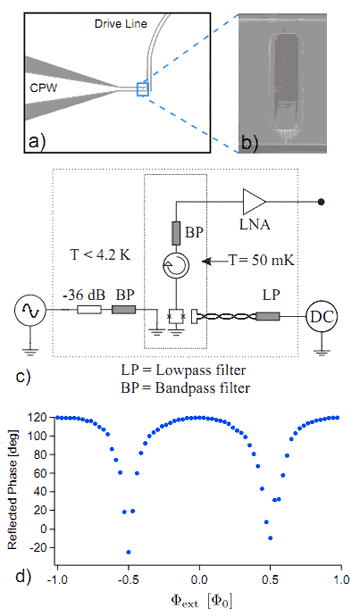
«پر دلسینگ» (Per Delsing)، فیزیکدانی از دانشگاه صنعتی چالمرز و همکارانش، این مشکل را به‌کمک یک قطعه الکترونیکی کوانتومی، موسوم به «ابزار تداخل‌سنج ابررسانای کوانتومی» یا مختصراً SQUID، حل کرده‌اند. این تیم، دست به طراحی ِ یک مدار الکترونیکی ِ ابررسانا زدند که در آن یک SQUID، نقش صفحه متحرک آزمایش‌مان را بازی می‌کرد. این فیزیکدانان، با روش هوشمندانه‌ای موفق شدند که با عبور دادنِ یک میدان مغناطیسی از بین SQUID، آن را اندکی جابه جا کرده و پس از تغییر جهت میدان مغناطیسی القایی، و تولید همان جابه جایی (این‌دفعه در جهت معکوس) و تکرار چندمیلیاردباری این کار در هر ثانیه، سرعت صفحه را به حدود پنج درصد سرعت نور برسانند؛ سرعتی که برای تشخیص اثر پیش‌بینی‌شده کفایت می‌کرد. به ادعای این دانشمندان، نتیجه این آزمایش، بارانی از فوتون‌های میکروویو شد که به‌شکلی خودانگیخته از خلأ «تولید» می‌شدند. آزمایشات گروه، نشان از این می‌داد که فرکانس این امواج، تقریباً نصف فرکانس حرکت رفت‌وبرگشتی صفحه است و این، دقیقاً مطابق با پیش‌بینی‌های مکانیک کوانتومی بود.

کاپاسو، چنین آزمایشی را «بسیار هوشمندانه» می‌خواند و شک دارد که بتوان از چنین اثر ناچیزی، فواید تجربی چشمگیری را به‌دست آورد؛ چراکه نرخ تولید فوتون‌های خودانگیخته چندان زیاد نیست، اما وی این آزمایش را یک اثبات دل‌پسند از اصول مکانیک کوانتومی دانسته و امیدوار است که یک صفحه فلزیِ متحرک، نور قابل ملاحظه‌ای را از خلأ ایجاد کند.

او معتقد است که سامانه‌های میکرومکانیکی، در آینده قادر به رساندن سرعت صفحه به حدود مطلوب‌ تولید چنین نوری هستند. پندری می‌گوید اگر این مشاهدات به تأیید رسد، سیل هیجان فیزیکدانان را هم به دنبال خواهد داشت: «پژوهش در این زمینه، محرک شوق قابل توجهی در دل فیزیکدانان خواهد بود.»

لینک مقاله اصلی به نقل از Nature

لینک مقاله در وبلاگ

دختری که فِرفِره های کیهانی را کشف کرد

سوزان جاسلين بل در 15 جولاي 1943 در شهر بلفاست در ايرلند شمالي به دنيا آمد. پدرش معمار رصدخانه آرما بود كه در حومه شهر قرارداشت و سوزان اغلب اوقات با او به رصدخانه مي‌رفت. مصاحبت با كاركنان رصدخانه، سوزان را از همان كودكي شيفته اخترشناسي كرد. او پس از اتمام دبيرستان به دانشگاه گلاسكو رفت و در سال 1965 مدرك كارشناسي خود را در رشته فيزيك از اين دانشگاه اخذ كرد و در همان سال در دوره دكتراي اخترشناسي دانشگاه كمبريج پذيرفته شد.

جاسلين بل در كمبريج، زير نظر آنتوني هويش، ساخت راديوتلسكوپ بزرگي را براي رصد اختروش‌ها آغاز كرد. ساخت اين راديوتلسكوپ كه آرايه‌اي عظيم متشكل از 2 هزار آنتن دوقطبي در يك مساحت تقريباً دو هكتاري بود و در طول موج 3.7 متري كار مي‌كرد حدوداً دو سال تمام طول كشيد. نهايتاً در ماه جولاي 1967 كار رصد آسمان با اين راديوتلسكوپ جديد آغاز شد.

علائم راديويي دريافت شده از اعماق آسمان توسط اين راديوتلسكوپ به كمك قلم‌هاي آغشته به مركب بر روي كاغذهاي ثبات متحرك مخصوصي ثبت مي‌شد. جاسلين بل مي‌بايست طي هر هفته تقريباً يكصد متر نمودار ثبت شده بر روي كاغذ ثبات را به دقت تحليل نمايد.

در يكي از شب‌هاي تابستان در ماه آگست، جاسلين بل به يك سيگنال راديويي عجيب برخورد كرد. تحليل سيگنال نشان مي‌داد كه احتمالاً از يك منبع راديويي چشمك‌زن در پهنه آسمان حاصل شده است. طي هفته‌هاي بعد نيز اين منبع راديويي اسرارآميز همچنان به چشمك زدن خود ادامه داد. براي تحليل دقيق‌تر اين منبع به دستگاه ثباتي نياز بود كه كاغذ را با سرعت بسيار بيشتري عبور دهد. متأسفانه ساخت اين دستگاه كمي طول كشيد و منبع از حوزه ديد آسمان محل خارج شد. اواخر نوامبر بود كه منبع دوباره از سوي ديگر آسمان پديدار شد. رصد اين منبع با سيستم ثبات جديد، بسيار شگفت‌انگيز بود. اين منبع كيهاني اسرارآميز تقريباً هر یک سوم ثانيه يك پالس منظم از خود گسيل مي‌كرد.

خبر اين كشف حيرت‌انگيز، در ميان اخترفيزيكدان‌ها غوغايي برپا كرد. به زودي مشخص شد كه اين منبع ناشناخته درواقع يك ستاره نوتروني درحال دوران است كه در هربار چرخش خود، پرتوهايي را همانند يك فانوس دريايي عظيم در پهنه كيهان گسيل مي‌كند. بدين ترتيب جاسلين بل اولين تپ‌اختر شناخته شده توسط انسان را صيد كرده بود. از آن زمان تاكنون چند صد نمونه ديگر از اين فرفره‌هاي كيهاني كشف شده‌اند كه سريع‌ترين آنها در هر ثانيه يكهزار بار به دور خود مي‌چرخد.

به پاس اين كشف مهم، جوايز مهمي نظير جايزه اوپنهايمر، جايزه انجمن سلطنتي نجوم، جايزه انجمن اخترشناسي آمريكا و دكتراي افتخاري دانشگاه هاروارد به جاسلين بل اهداء شد. او همچنان مشتاقانه به جست و جو و کاوش در شگفتی ها و اسرار كيهان مشغول است.

Every Black Hole Contains Another Universe?

Like part of a cosmic Russian doll, our universe may be nested inside a black hole that is itself part of a larger universe. In turn, all the black holes found so far in our universe—from the microscopic to the supermassive—may be doorways into alternate realities.

According to a mind-bending new theory, a black hole is actually a tunnel between universes—a type of wormhole. The matter the black hole attracts doesn't collapse into a single point, as has been predicted, but rather gushes out a "white hole" at the other end of the black one, the theory goes.

In a recent paper published in the journal Physics Letters B, Indiana University physicist Nikodem Poplawski presents new mathematical models of the spiraling motion of matter falling into a black hole. His equations suggest such wormholes are viable alternatives to the "space-time singularities" that Albert Einstein predicted to be at the centers of black holes.

According to Einstein's equations for general relativity, singularities are created whenever matter in a given region gets too dense, as would happen at the ultradense heart of a black hole. Einstein's theory suggests singularities take up no space, are infinitely dense, and are infinitely hot—a concept supported by numerous lines of indirect evidence but still so outlandish that many scientists find it hard to accept. If Poplawski is correct, they may no longer have to.

According to the new equations, the matter black holes absorb and seemingly destroy is actually expelled and becomes the building blocks for galaxies, stars, and planets in another reality.

Wormholes Solve Big Bang Mystery?

The notion of black holes as wormholes could explain certain mysteries in modern cosmology, Poplawski said. For example, the big bang theory says the universe started as a singularity. But scientists have no satisfying explanation for how such a singularity might have formed in the first place. If our universe was birthed by a white hole instead of a singularity, Poplawski said, "it would solve this problem of black hole singularities and also the big bang singularity."

Wormholes might also explain gamma ray bursts, the second most powerful explosions in the universe after the big bang. Gamma ray bursts occur at the fringes of the known universe. They appear to be associated with supernovae, or star explosions, in faraway galaxies, but their exact sources are a mystery. Poplawski proposes that the bursts may be discharges of matter from alternate universes. The matter, he says, might be escaping into our universe through supermassive black holes—wormholes—at the hearts of those galaxies, though it's not clear how that would be possible. "It's kind of a crazy idea, but who knows?" he said.

There is at least one way to test Poplawski's theory: Some of our universe's black holes rotate, and if our universe was born inside a similarly revolving black hole, then our universe should have inherited the parent object's rotation. If future experiments reveal that our universe appears to rotate in a preferred direction, it would be indirect evidence supporting his wormhole theory, Poplawski said.

Wormholes Are "Exotic Matter" Makers?

The wormhole theory may also help explain why certain features of our universe deviate from what theory predicts, according to physicists. Based on the standard model of physics, after the big bang the curvature of the universe should have increased over time so that now—13.7 billion years later—we should seem to be sitting on the surface of a closed, spherical universe. But observations show the universe appears flat in all directions. What's more, data on light from the very early universe show that everything just after the big bang was a fairly uniform temperature.

That would mean that the farthest objects we see on opposite horizons of the universe were once close enough to interact and come to equilibrium, like molecules of gas in a sealed chamber. Again, observations don't match predictions, because the objects farthest from each other in the known universe are so far apart that the time it would take to travel between them at the speed of light exceeds the age of the universe.

To explain the discrepancies, astronomers devised the concept of inflation. Inflation states that shortly after the universe was created, it experienced a rapid growth spurt during which space itself expanded at faster-than-light speeds. The expansion stretched the universe from a size smaller than an atom to astronomical proportions in a fraction of a second.

The universe therefore appears flat, because the sphere we're sitting on is extremely large from our viewpoint—just as the sphere of Earth seems flat to someone standing in a field. Inflation also explains how objects so far away from each other might have once been close enough to interact. But—assuming inflation is real—astronomers have always been at pains to explain what caused it. That's where the new wormhole theory comes in.

According to Poplawski, some theories of inflation say the event was caused by "exotic matter," a theoretical substance that differs from normal matter, in part because it is repelled rather than attracted by gravity. Based on his equations, Poplawski thinks such exotic matter might have been created when some of the first massive stars collapsed and became wormholes. "There may be some relationship between the exotic matter that forms wormholes and the exotic matter that triggered inflation," he said.

Wormhole Equations an "Actual Solution"

The new model isn't the first to propose that other universes exist inside black holes. Damien Easson, a theoretical physicist at Arizona State University, has made the speculation in previous studies.

"What is new here is an actual wormhole solution in general relativity that acts as the passage from the exterior black hole to the new interior universe," said Easson, who was not involved in the new study. "In our paper, we just speculated that such a solution could exist, but Poplawski has found an actual solution," said Easson, referring to Poplawski's equations. Nevertheless, the idea is still very speculative, Easson said in an email.

"Is the idea possible? Yes. Is the scenario likely? I have no idea. But it is certainly an interesting possibility." Future work in quantum gravity—the study of gravity at the subatomic level—could refine the equations and potentially support or disprove Poplawski's theory, Easson said.

Wormhole Theory No Breakthrough

Overall, the wormhole theory is interesting, but not a breakthrough in explaining the origins of our universe, said Andreas Albrecht, a physicist at the University of California, Davis, who was also not involved in the new study. By saying our universe was created by a gush of matter from a parent universe, the theory simply shifts the original creation event into an alternate reality.

In other words, it doesn't explain how the parent universe came to be or why it has the properties it has—properties our universe presumably inherited. "There're really some pressing problems we're trying to solve, and it's not clear that any of this is offering a way forward with that," he said.

Still, Albrecht doesn't find the idea of universe-bridging wormholes any stranger than the idea of black hole singularities, and he cautions against dismissing the new theory just because it sounds a little out there. "Everything people ask in this business is pretty weird," he said. "You can't say the less weird [idea] is going to win, because that's not the way it's been, by any means."


 به نقل از  NationalGeographic

Moving mirrors make light from nothing

 A team of physicists is claiming to have coaxed sparks from the vacuum of empty space. If verified, the finding would be one of the most unusual experimental proofs of quantum mechanics in recent years and "a significant milestone", says John Pendry, a theoretical physicist at Imperial College London who was not involved in the study. The researchers, based at the Chalmers University of Technology in Gothenburg, Sweden, will present their findings early next week at a workshop in Padua, Italy. They have already posted a paper on the popular pre-print server arXiv.org, but have declined to talk to reporters because the work has not yet been peer-reviewed. High-profile journals, including Nature, discourage researchers from talking to the press until their findings are ready for publication.

Nevertheless, scientists not directly connected with the group say that the result is impressive. "It is a major development," says Federico Capasso, an experimental physicist at Harvard University in Cambridge, Massachusetts, who has worked on similar quantum effects. At the heart of the experiment is one of the weirdest, and most important, tenets of quantum mechanics: the principle that empty space is anything but. Quantum theory predicts that a vacuum is actually a writhing foam of particles flitting in and out of existence.

The existence of these particles is so fleeting that they are often described as virtual, yet they can have tangible effects. For example, if two mirrors are placed extremely close together, the kinds of virtual light particles, or photons, that can exist between them can be limited. The limit means that more virtual photons exist outside the mirrors than between them, creating a force that pushes the plates together. This 'Casimir force' is strong enough at short distances for scientists to physically measure it.

From virtual to real

For decades, theorists have predicted that a similar effect can be produced in a single mirror that is moving very quickly. According to theory, a mirror can absorb energy from virtual photons onto its surface and then re-emit that energy as real photons. The effect only works when the mirror is moving through a vacuum at nearly the speed of light — which is almost impossible for everyday mechanical devices. Per Delsing, a physicist at the Chalmers University of Technology, and his colleagues circumvented this problem using a piece of quantum electronics known as a superconducting quantum interference device (SQUID), which is extraordinarily sensitive to magnetic fields.

The team fashioned a superconducting circuit in which the SQUID effectively acted as a mirror. Passing a magnetic field through the SQUID moved the mirror slightly, and switching the direction of magnetic field several billion times per second caused it to 'wiggle' at around 5% the speed of light, a speed great enough to see the effect. The result was a shower of microwave photons shaken loose from the vacuum, the team claims. The group's analysis shows that the frequency of the photons was roughly half the frequency at which they wiggled the mirror — as was predicted by quantum theory.

Capasso calls the experiment "very clever". He doubts that the effect has any practical use because it doesn't generate large numbers of photons, but he considers it a nice demonstration of quantum mechanics. He still hopes to see a moving piece of metal generate detectable light from the vacuum, and believes that micromechanical systems may eventually be able to reach such speeds. Pendry says that the result, if it stands up, is bound to generate excitement. "Work in this area stirs considerable passion in the breasts of physicists."

به نقل از Nature

پکش رشته‌ی الاستیک در کره

مسأله پكش و مچاله شدن اجسام باريك الاستيك بطور روزمره در طبیعت، صنعت  و فعالیت های بشری ديده مي شود که از آن جمله می توان پکیده شدن رشته های DNA درون ویروس ها،  مچاله شدن ميله ها و صفحات فلزي يا كاغذي و يا انباشتگي سيم پلاتيني در درون حفره مويرگي كه در درمان بيماري آماس مغزي صورت مي گيرد اشاره كرد. هر چند اين پديده ها در ابعاد طولی مختلف مشاهده می شوند ولي همه آنها برخی جنبه های فیزیکی معمول را به طور مشترک دارا هستند. با وجود كاربردهاي فراوان اين مسئله و اهميت آن هنوز درک فیزیکدانان از این سیستم ها محدود مي باشد.

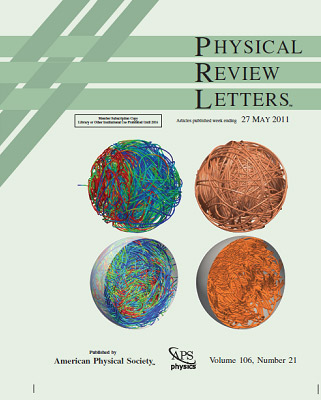
در پژوهشي كه اخیرا توسط پژوهشگران دانشگاه تحصيلات تكميلي در علوم پايه زنجان و همکارانشان در دانشگاه صنعتي زوريخ به انجام رسیده و نتايج آن  در نشریه Physics Review Letters باا عنوان "پكش سيمهاي الاستيك در محفظه كروي " به چاپ رسيد، آنها نشان داده اند كه انحناي ذاتي رشته هاي  الاستيك و پيچش آن  سهم تعيين كننده اي در ريختبندي ساختارهاي ايجاد شده دارند،  بطوريكه اگر رشته داراي انحناي ذاتي بوده و اجازه آزاد شدن پيچش به رشته داده نشود ساختارهاي ايجاد شده مانند توده اي از اسپاگتي در هم تنيده،  نامنظم مي باشند.  ولي در مورد رشته هاي صافي كه مي توانند پيچش خود را آزاد كنند ساختارها پكيده منظمي مشاهده مي شود. در هر دو ريختبندي كسر پكش بيشينه سيستم به سايز سيستم يعني نسبت قطر رشته به قطركره وابسته است.  در واقع جواب به اين سوال كه چه مقدار سيم براي پركردن يك كره لازم است به انحناي ذاتي سيم، نحوه آزاد شدن پيچش  و سايز سيستم وابسته است. بطوريكه  بيشترين مقدار چگالي پكش در حالت منظم براي كره هاي بزرگ و درحالت نامنظم براي كره هاي كوچك اتفاق مي افتد.
انتظار میرود که اين پژوهش بتواند در شماري از مسائل در شاخه هاي ديگري مانند درمان بيماري آماس مغزي، پكش رشته پلاتين در درون حفره هاي مويرگي مغز  و پكش DNA  در داخل ويروس، مورد استفاده قرار گيرد.

همچنين اين مقاله به عنوان مقاله پيشنهادي ويراستار (Editor's Suggestion) انتخاب گرديده و خبر اين پژوهش در بخش SYNOPSIS ، مجله الكترونيكي  Physics انجمن فيزيك آمريكا نيز عنوان گرديده است.

عكس روي جلد شماره 27 مي مجله Physics Review Letters از مقاله مذكور انتخاب گرديده است. طرف چپ نمونه  شبيه سازي  حالت نامنظم  پكش و طرف راست توموگرافي نمونه آزمايشگاهي را نشان مي دهد.

اولین مشاهده‌ی اثر دینامیک کازیمیر

در اولین شاهد تجربی‌ِ‌ی اثر دینامیک کازیمیر، آینه‌ئی به‌سرعت حرکت می‌کند و فوتون‌های مجازی را به فوتون واقعی تبدیل می‌کند.

کریستوفر ویلسون از دانشگاه شالمش سوئد و دوستانش مقاله‌ی بسیار خواندنی‌ی خود در باره‌ی این قطعه‌ کار فوق‌العاده‌ی علمی‌شان را این‌چنین آغاز می‌کنند: "یکی از شگفتی‌آورترین پیش‌بینی‌های نظریه‌ی کوانتومی‌ی مدرن این است که خلأ واقعاً خالی نیست و پر از ذرات مجازی‌ست که برای لحظاتی کوتاه پا به عالم وجود می‌گذارند و سپس ناپدید می‌شوند." اما این طوفان کنش‌های کوانتومی‌ی خلأ بدون ‌اثر نیست. از سال 1948 تا کنون فیزیکدان‌ها می‌دانند این ذرات مجازی دو آینه‌ی تخت موازی را هنگامی که به هم نزدیک شوند به‌سوی هم می‌رانند و دلیلش نیز سرراست است: هنگامی که فاصله‌ی بین دو آینه از طول‌موج ذرات مجازی کوتاه‌تر است این ذرات دیگر نمی‌توانند در شکاف بین دو آینه ظاهر و ناپدید شوند؛ فشار خلأ بیرون آینه‌ها بیش از فشار خلأ بین آینه‌ها خواهد بود و آینه‌ها به‌سوی هم رانده خواهند شد.

این پدیده، اثر ایستا‌‌ی کازیمیر است که نخستین بار اندازه‌گیری‌های مربوط به آن را دو تیم پژوهشی در ایالات متحد در سال ۱۹۹۸ انجام دادند. اما اثر دیگری موسوم به اثر دینامیک‌ کازیمیر وجود دارد که تا کنون مشاهده نشده بود. این اثر هنگامی رخ می‌دهد که آینه‌ئی با سرعت نسبیتی حرکت کند: دریای ذرات مجازی در سرعت‌های کم به‌سادگی خود را با حرکت آینه وفق می‌دهند و هم‌چنان به‌صورت زوج‌های ذره و پادذره به‌وجود می‌آیند، یک‌دیگر را نابود می‌کنند، ناپدید می‌شوند؛ اما زمانی که سرعت آینه به سرعت فوتون نزدیک ‌شود، یعنی در سرعت های نسبیتی، برخی از فوتون‌ها از همتای خود عقب می‌مانند و نابود نمی‌شوند. این فوتون‌های مجازی مجبور می‌شوند واقعی شوند و آینه شروع به زایش نور می‌کند.

نظریه همین است اما در عمل رساندن سرعت آینه‌ئی معمولی به سرعت‌های نسبیتی کاری بسیار مشکل است. ویلسون و همکارانش حقه‌هائی در آستین داشتند. به‌جای آینه‌ی معمولی آنها خط انتقالی به کار بردند که به ابزار تداخلی‌ی ابررساننده‌ی کوانتومی (SQUID) متصل است. دست‌کاری‌ی SQUID طول الکتریکی‌ی خط را تغییر می‌دهد و این تغییر با حرکت‌ آینه‌ی الکترومعناطیسی هم‌ارز است.

با مدوله‌کردنِ SQUID در بس‌آمدهای مگاهرتز، آینه پس و پیش می‌رود. برای آن‌که مقیاس دست‌تان بیاید، درازی‌ی خط انتقال ۱۰۰ میکرومتر است و آینه در حد چند نانومتر پس و پیش می‌رود. اما آهنگ این پس‌وپیش‌رفتن چنان است که آینه با سرعتی نزدیک به ۵ درصد سرعت نور حرکت ‌کند. با کامل‌کردن این روش، ویلسون و همکارانش تنها باید دما را بسیار کم می‌کردند و به دنبال فوتون می‌گشتند. دقیقاً نیز چنین شد: همان‌طور که پیش‌بینی می‌شد فوتون‌هائی مشاهده شد که از آینه‌ی متحرک برمی‌آمدند. آنها مقاله‌ را با این نتیجه‌گیری‌ی کوتاه به پایان می‌رسانند: " به باور ما این نتایج اولین مشاهده‌ی تجربی‌ی اثر دینامیک کازیمیر است." نتیجه‌ئی بسیار تأثیرگذار!

Arachnophobes Beware: Hubble Snaps Close-up of the Tarantula

The NASA/ESA Hubble Space Telescope has produced an outstanding image of part of the famous Tarantula Nebula, a vast star-forming cloud of gas and dust in our neighbouring galaxy, the Large Magellanic Cloud. In this picture, we see a close-up of the Tarantula’s central region, glowing brightly with ionised gases and young stars.

The wispy arms of the Tarantula Nebula were originally thought to resemble spindly spider legs, giving the nebula its unusual name. The part of the nebula visible in this image from Hubble’s Advanced Camera for Surveys is criss-crossed with tendrils of dust and gas churned up by recent supernovae. These supernova remnants include NGC 2060, visible above and to the left of the centre of this image, which contains the brightest known pulsar. The tarantula’s bite goes beyond NGC 2060. Near the edge of the nebula, outside the frame, below and to the right, lie the remains of supernova SN 1987a, the closest supernova to Earth to be observed since the invention of telescopes in the 17th century. Hubble and other telescopes have been returning to spy on this stellar explosion regularly since it blew up in 1987, and each subsequent visit shows an expanding shockwave lighting up the gas around the star, creating a pearl necklace of glowing pockets of gas around the remains of the star. SN 1987a is visible in wide field images of the nebula, such as that taken by the MPG/ESO 2.2-metre telescope.

Together with dying stars, the Tarantula Nebula is packed with young stars which have recently formed from the nebula’s supply of hydrogen gas. These toddler-stars shine forth with intense ultraviolet light that ionises the gas, making it light up red. The light is so intense that although around 170 000 light-years distant, and outside the Milky Way, the Tarantula Nebula is nevertheless visible without a telescope on a dark night to Earth-bound observers. This nebula might be far away, but it is the most luminous example of its type that astronomers have observed in the local Universe. A compact and extremely bright star cluster called RMC 136  lies above and to the left of this field of view, providing much of the radiation that powers the multi-coloured glow. Until recently, astronomers debated whether the source of the intense light was a tightly bound cluster of stars, or perhaps an unknown type of super-star thousands of times bigger than the Sun. It is only in the last 20 years, with the fine detail revealed by Hubble and the latest generation of ground-based telescopes, that astronomers have been able to conclusively prove that it is, indeed, a star cluster.

But even if the Tarantula Nebula doesn’t contain this hypothetical super-star, it still hosts some extreme phenomena, making it a popular target for telescopes. Within the bright star cluster lies star RMC 136a1, which was recently found to be the heaviest ever discovered: the star's mass when it was born was around 300 times that of the Sun. This heavyweight is challenging astronomers’ theories of star formation, smashing through the upper limit they thought existed on star mass.

چهارمین کارگاه محاسبات سریع

پژوهشگاه دانشهای بنیادی با همکاری شاخه فیزیک محاسباتی انجمن فیزیک ایران کارگاه محاسبات سریع و تورین را در تاریخ ۲۲ تا ۲۸ آذرماه ۱۳۹۰ برگزار می‌نماید. در این کارگاه شش روزه که چهارمین کارگاه در این زمینه است، با محاسبات سریع و محاسبات موازی و نیز محاسبات تورین آشنا خواهید شد. از آنجا که مباحث مطرح شده در این کارگاه بر پایه سیستم عامل لینوکس است لذا شرکت کنندگان باید آشنا به محیط لینوکس باشند و با برنامه نویسی به اندازه کافی آشنا باشند. شرکت کنندگان در این کارگاه صبح ها با مباحث نظری آشنا شده و بعد از ظهرها در کارگاه عملی شرکت خواهند کرد.


تاریخچه:

کاربرد محاسبات سریع (High Performance Computing) و محاسبات تورین (Grid computing) در بسیاری از حوزه های فیزیک، شیمی، بیولوژی، مهندسی، مواد و علوم اجتماعی گسترش یافته است. امروزه هر یک از این حوزه ها به محاسبه با ارقام و حجم بزرگی از داده ها سروکار دارند و لذا نیاز به توان محاسباتی بالاتری دارند. به طور نمونه شبیه سازی های کوچک و بزرگ مقیاس مهمترین زمینه در حوزه پیش بینی آب و هوا، طراحی مواد و داروها است. هدف این کارگاه آموزشی أشنا کردن محققان جوان با مهارت های پایه ای مورد نیاز برای روش های محاسباتی بر پایه محاسبات سریع است. از طرفی آشنایی با روش نوین محاسبات تورین به افزایش توان محاسباتی محققان کمک خواهد کرد. این کارگاه آموزشی برای آشنایی با محاسبات سریع و محاسبات تورین برای چهارمین بار در ایران برگزار می‌گردد.

اهداف کارگاه:
  • آشنایی با محاسبات موازی و ماشین های موازی
  • برنامه نویسی موازی به کمک MPI و Open MP
  • کتابخانه های موازی
  • آشنایی با محاسبات تورین و gLite
برگزار کنندگان:
  • شاهین روحانی (دانشگاه صنعتی شریف و پژوهشگاه دانشهای بنیادی)
  • محمدرضا اجتهادی (دانشگاه صنعتی شریف)
  • سیدمهدی واعظ علایی (دانشگاه تهران)
  • سیدحامد سید علایی (پژوهشگاه دانشهای بنیادی)
  • Antun Balaz (Institute of Physics, Serbia)


 علاقه مندان برای کسب اطلاعات بیشتر می توانید به وب سایت رسمی چهارمین کارگاه محاسبات سریع و تورین مراجعه نمایند.


Galaxy NGC 4214: A star formation laboratory

Hubble’s newest camera has taken an image of galaxy NGC 4214. This galaxy glows brightly with young stars and gas clouds, and is an ideal laboratory to research star formation and evolution. Size isn’t everything... in astronomy, at least. Dwarf galaxy NGC 4214 may be small, but what it lacks in size it makes up for in content. It is packed with everything an astronomer could ask for, from hot, young star-forming regions to old clusters with red supergiants.

The intricate patterns of glowing ionised hydrogen gas, cavities blown clear of gas by stellar wind, and bright stellar clusters of NGC 4214 can be seen in this optical and near-infrared image, taken using the Wide Field Camera 3 (WFC3) instrument on the NASA/ESA Hubble Space Telescope. A huge heart-shaped cavity — possibly the galaxy’s most eye-catching feature — can be seen at the centre of the image. Inside this hole lies a large cluster of massive, young stars ranging in temperature from 10 000 to 50 000 degrees Celsius. Their strong stellar winds are responsible for the creation of this hollow area. The resulting lack of gas prevents any further star formation from occurring in this region. Located around 10 million light-years away in the constellation of Canes Venatici (The Hunting Dogs), the galaxy’s relative close proximity to us, combined with the wide variety of evolutionary stages among the stars, makes it an ideal laboratory to research what triggers star formation and evolution. By chance, there is relatively little interstellar dust between us and NGC 4214, making our measurements of it more accurate.

NGC 4214 contains a large amount of gas, some of which can be seen glowing red in the image, providing abundant material for star formation. The area with the most hydrogen gas, and consequently, the youngest clusters of stars (around two million years old), lies in the upper part of this Hubble image. Like most of the features in the image, this area is visible due to ionisation of the surrounding gas by the ultraviolet light of a young cluster of stars within. Observations of this dwarf galaxy have also revealed clusters of much older red supergiant stars that we see at a late stage in their evolution. Additional older stars can be seen dotted all across the galaxy. While these are dominant in infrared emission they can only be seen shining faintly in this visible-light image. The variety of stars at different stages in their evolution, indicate that the recent and ongoing starburst periods are by no means the first, and the galaxy’s numerous ionised hydrogen regions suggest they will not be the last.

لینک منبع

باران کریستالی در ابرهای بیرونی ستارگان جوان

تلسکوپ فضایی اسپیتزراز انزال خرده بلورهای سبز رنگ ماده معدنی اولیوین بر روی ستارگان در حال تولد خبر می‌دهد. اولین بار است که چنین بلورهایی در ابرهای گاز و غبار اطراف یک ستاره در حال شکل گیری دیده می‌شوند. ستاره‌شناسان هنوز علت اصلی وقوع این پدیده را نمی‌دانند، اما به احتمال زیاد، فورانهای گاز که از ستاره نوپا به بیرون پرتاب می‌شوند کریستال‌ها را بوجود می‌آورند.

تام مِگِث از دانشگاه تولِدو اوهایو می‌گوید: برای تشکیل این کریستال‌ها، گرمایی به اندازه گدازه‌های آتشفشانی باید فراهم شود. ما گمان می‌کنیم که بلور‌ها در نزدیکی سطح ستاره در حال شکل گیری ایجاد شده و سپس به ابرهای اطراف، جایی که دمای کمتری دارد، رانده می‌شوند و سرانجام دوباره بر ستاره می‌بارند. ردیابهای فروسرخ اسپیتزر، باران کریستال را در اطراف یک پیش ستاره دوردست در صورت فلکی جبار دیده‌اند. بلور‌ها به شکل فورستریت (اولیوین-سیلیکات منیزیم) هستند که در همه جا یافت می‌شوند، از جواهرات گرانبها گرفته تا شنهای سواحل و یا حتی کهکشانهای دوردست. در ماموریتهای استارداست و دیپ ایمپکت، وجود چنین کریستالهایی در دنباله دار‌ها نیز اثبات شده بود.
به گفته چارلز پوتیت ار داشگاه تولِدو، اگر می‌توانستیم به طریقی به قرص برافزایشی یک پیش ستاره نقل مکان کنیم، با دنیایی بسیار تاریک مواجه می‌شدیم. کریستال‌ها، ‌‌‌ همان مقدار نور ناچیز را بازتابانده و در تاریکی پیرامون پیش ستاره می‌درخشند.

پیش از این، کریستالهای فورستریت در دیسکهای پیش سیاره‌ای اطراف ستارگان جوان دیده شده بودند. کشف بلور‌ها در ابرهای سرد اطراف یک پیش ستاره که دمایی کمتر از ۱۷۰ درجه سلیوس زیر صفر دارند، تعجب برانگیز است. به همین دلیل ستاره‌شناسان گمان می‌کنند که فورانهای ستاره، کریستالهای پخته شده در سطح ستاره در حال شکل گیری را به ابرهای سرد بیرونی منتقل می‌کنند.
یافته جدید همچنین علت وجود این کریستال‌ها را در دنباله دارهایی که در حومه بسیار سرد منظومه شمسی ما شکل گرفته‌اند، به خوبی توضیح می‌دهد. دنباله دار‌ها در مناطقی که آب منجمد است شکل گرفته‌اند، نواحیی که بسیار سرد‌تر از آن هستند که گرمای مورد نیاز برای تشکیل کریستال‌ها (حدود ۷۰۰ درجه سلسیوس) را فراهم کنند. به باور ستاره‌شناسان، موادی که در نزدیکی خورشید شکل گرفتند (نظیر کریستال‌ها)، سرانجام به مناطق سرد‌تر بیرونی منظومه شمسی منتقل شدند و به ساختار دنباله دار‌ها نیز راه یافتند. تلسکوپهای فروسرخ اسپیتزر و هرشل از این پس اطلاعات بیشتری را از در هم آمیختگی اجزاء کیهانی در فرایند تشکیل سامانه‌های سیاره‌ای در اختیار دانشمندان قرار خواهند داد.

رکورد فاصله کیهانی 'شکسته شد'

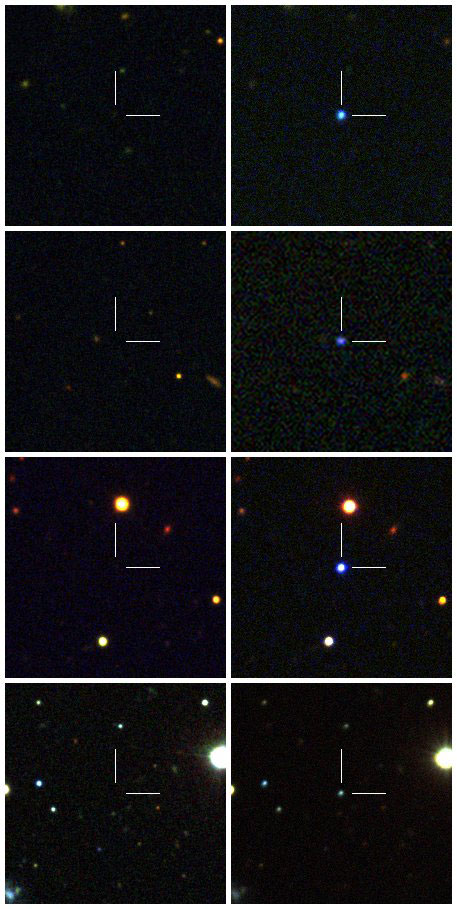
انفجار مهیب یک ستاره بسیار عظیم در نزدیکی لبه کیهان قابل رؤیت ممکن است دورترین شیء واحدی باشد که تاکنون توسط یک تلسکوپ مشاهده شده است. دانشمندان معتقدند که این انفجار که توسط رصدخانه فضایی سوئیفت ناسا ردیابی شده است فقط 520 میلیون سال پس از انفجار بزرگ روی داد. این بدان معنی است که رسیدن نور آن به زمین 13.14 میلیارد سال نوری طول کشیده است. جزئیات این اکتشاف به زودی در نشریه "استروفیزیکال" منتشر خواهد شد.

منجمان این رویداد را که در آوریل سال 2009 توسط سوئیفت ضبط شد "جی آر بی 090429بی" نامگذاری کرده اند. "جی آر بی" مخفف "انفجار اشعه گاما" (Gama-Ray burst) است - پالسی ناگهانی از نور بسیار پرانرژی که در آسمان ظاهر می شود. این انفجارها معمولا به حوادث بسیار خشن مانند فروپاشی ستارگان عظیم در پایان عمرشان مربوط است.

دکتر آنتونیو کوچیارا از دانشگاه کالیفرنیا در برکلی گفت: "این یک ستاره عظیم بوده است، احتمالا با جرمی 30 برابر خورشید." او به بی بی سی گفت: "ما اطلاعات کافی نداریم تا ادعا کنیم این یکی از ستارگان به اصطلاح 'جمعیت سه' بود، که اولین نسل ستارگان در کیهان بودند. اما مسلما در اولین مراحل تشکیل ستارگان هستیم."

سوئیفت (سریع) همانطور که از نام آن پیداست باید فوران اشعه گاما را به سرعت ضبط کند زیرا فقط برای چند دقیقه روی می دهد. خوشبختانه تشعشعات بعدی این رویداد در طول موج های دیگر گاه برای چند روز ادامه می یابد که امکان رصد آن توسط سایر تلسکوپ ها برای تعیین فاصله آن را می دهد. دانشمندان بسیار مشتاق هستند این فاصله های دور را کاوش کنند زیرا اطلاعات زیادی در مورد تکامل کیهان به آنها می دهد و اینکه چرا کیهان اینگونه که الان هست به نظر می رسد. آنها به خصوص مایل به ردیابی اولین جمعیت های ستارگان هستند. این ستارگان عظیم آبی رنگ از گازهای سرد خنثی که در جوانی کیهان فراوان بود متولد شدند. این ستارگان بسیار درخشان اما کم دوام بودند که به پیدایش اولین عناصر سنگین منجر شدند.

نور شدید فرابنفش آنها باعث "سرخ شدن" گاز خنثی اطرافشان می شد - و جدایی الکترون ها از اتم ها - که حاصل آن تولید پلازمایی متراکم میان کهکشان ها بود که هنوز آن را در فاصله میان ستارگان نزدیک ردیابی می کنیم. به این ترتیب "جی آر بی 090429بی" نه فقط به عنوان رکورد دار بلکه به خاطر آنکه در این دوره زمانی قرار دارد علاقه شدید منجمان را جلب کرده است.


به نقل از بی.بی.سی

با تحقیقی تازه 'وجود انرژی تاریک تایید شد'

نتایج اولیه یک تحقیق مهم ستاره شناسی که با استفاده از جدیدترین تکنیک‌ها انجام شده است، وجود پدیده رمز آلود انرژی تاریک را تایید کرده است. انرژی تاریک حدود ۷۴ درصد از جهان را تشکیل می دهد و اثبات وجود آن می تواند توضیح دهد که چرا عالم با شتابی فزاینده در حال انبساط است. دانشمندان با بررسی بیش از دویست هزار کهکشان به این یافته دست پیدا کردند. این دانشمندان از دو نوع بررسی متفاوت استفاده کردند تا بتوانند به طور مستقل نتایج بررسی های پیشین درباره انرژی تاریک را بیازمایند.

دو تحقیق که توسط تیمی بین المللی از محققان انجام گرفته است برای چاپ در مجله "اعلان ماهانه انجمن سلطنتی ستاره شناسی" پذیرفته شده است. یکی از روش های تحقیق که توسط ستاره شناسان استفاده شده است، با اندازه گیری الگوی توزیع کهکشان ها در فضا انجام شده است. نوع دوم بررسی با اندازه گیری سرعت شکل گیری کهکشان ها در طول زمان انجام شده است. هر دو تکنیک وجود انرژی تاریک و شتاب انبساط جهان را تایید کرده است.

مفهوم انرژی تاریک برای اولین بار در اواخر دهه نود و با بررسی روشنی ابرنواخترها یا ستاره های در حال انفجار مطرح شد.

اینشتین درست می گفت

ستاره شناسان برای توضیح این که چرا سرعت انبساط جهان در حال افزایش است، ناگزیر بودند یا تئوری اینشتین درباره گرانش را بازنویسی کنند یا بپذیرند که در کیهان نوعی انرژی جدید وجود دارد.

دکتر کریس بلیک، از دانشگاه تکنولوژی سوینبرن در ملبورن استرالیا و یکی از نویسندگان این تحقیق در این باره گفت: " کاری که انرژی تاریک می کند مثل این است که شما توپی را به هوا پرتاب کنید و توپ با سرعتی فزاینده شروع به بالا رفتن در آسمان کند." او افزود: "همانطور که اینشتین گفته بود، نتایج بررسی ها به ما نشان می دهد که انرژی تاریک یک فاکتور ثابت در کیهان شناسی است. اگر تنها به گرانش تمرکز کنیم، قادر نخواهیم بود اثرات ثابت انرژی تاریک در طول زمان را ببینیم."

این یافته های تازه با اجرای یک پروژه بررسی کیهانی به نام ویگل زد به دست آمده است که از سال ۲۰۰۶ آغاز شد و امسال به پایان رسید. در این پروژه از اطلاعات ارسالی تلسکوپ فضایی "کاوشگر تکامل کهکشان" (گالکس) که متعلق به آژانس فضایی آمریکا (ناسا) است و تلسکوپ آنگلو-استرالین، که در کوه سایدینگ اسپرینگ در استرالیا مستقر است، استفاده شد. دانشمندان در این بررسی، از توزیع کهکشان ها در جهان، در حجمی نقشه برداری کردند که تاکنون انجام نشده بود. آنها هشت میلیارد سال در زمان به عقب برگشتند و بیش از نیمی از عمر عالم را بررسی کردند.

باب نیکول،کیهان شناس که در این پروژه نقشی نداشته است به بخش خبر بی بی سی گفت: "این یک گام بزرگ به جلو است. آنها افرادی جدی و دانشمندانی برجسته هستند و ما مدتی است که منتظر نتیجه تحقیقات آنها هستیم." آقای نیکول که پروفسور فیزیک فضایی در دانشگاه پورتموت در بریتانیا است افزود: " این تاییدی دوباره از وجود انرژی تاریک است و به ما اطلاعاتی دیگر می دهد تا تئوری های خود را با آن تبیین کنیم و به ما راه آینده را نشان می دهد. ستاره شناسان بیشتری در سال های پیش رو، به تحقیقاتی این چنین دست خواهند زد."

در حالی که انرژی تاریک حدود ۷۴ درصد از جهان را تشکیل می دهد، ماده تاریک، که ماده ای است که نور قابل ردیابی را بازتاب نمی دهد یا ساطع نمی کند حدود ۲۲ درصد از جهان را شکل می دهد. ماده معمولی مانند گاز، ستارگان، سیاره ها و کهکشان ها تنها چهار درصد کیهان را تشکیل داده است. با این حال، با وجود این که دانشمندان توانسته اند وجود انرژی تاریک و ماده تاریک را تایید کنند، هنوز قادر نیستند درباره این پدیده توضیح کاملی بدهند.

Astronomers put a new spin on the age of stars

Like some people, stars can be secretive about their age. But now, a team of astronomers has taken an important first step towards developing a new method to determine the age of a star – by measuring its rotation. "A star's rotation slows down steadily with time, like a top spinning on a table, and can be used as a clock to determine its age," says astronomer Søren Meibom of the Harvard-Smithsonian Center for Astrophysics. Meibom presented his findings at the 218th meeting of the American Astronomical Society, currently being held in Boston, Massachusetts.


Tell-tale spots

Being able to accurately determine the age of a star is essential in astronomy. It is particularly relevant for stars orbited by extrasolar planets. Meibom and his colleagues are working on a way to deduce the age of a star using information about its rotation, or "spin", by establishing a correlation between three parameters – the spin period, age and mass of the star. "Ultimately, we need to know the ages of the stars and their planets to assess whether alien life might have evolved on these distant worlds," says Meibom. "The older the planet, the more time life has had to get started. Since stars and planets form together at the same time, if we know a star's age, we know the age of its planets too."

The ages of stars that lie within star clusters are easy to determine, as most of the stars are formed at the same time. Astronomers plot the colours and magnitude of the stars and the pattern they see can be used to tell the cluster's age. But most stars known to have planets are not part of a cluster, just like our own Sun, and determining their age is much more difficult.

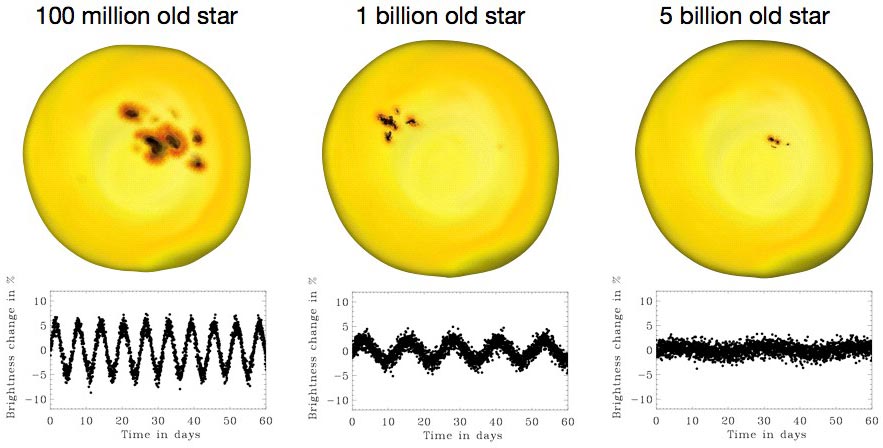
Using NASA's Kepler space telescope as part of the "Kepler Cluster Study", Meibom and his collaborators measured the rotation rates for stars in a one billion year old cluster called NGC 6811. The rotation is detected by looking for tiny changes in the brightness of the star caused by "spots" on its surface rotating in and out Kepler's sight. Kepler is designed to detect small changes in brightness and therefore able to measure the spin of a variety of stars, including older stars, which rotate slowly and have fewer and smaller spots.

Calibrating clocks

The rotation periods measured for stars in NGC 6811 represent an important step towards establishing a relationship between stellar rotation and age. When this is established, measuring the rotation period of any star can be used to derive its age – a technique referred to as "gyrochronology". It uses a rotating star as a clock, and calibrates this clock using stars in clusters with known ages. Once the clock is calibrated it works as a celestial time keeper.

To find the age–rotation relationship for stars in the NGC 6811 cluster, Meibom and his colleagues spent four years carefully sorting out stars in the cluster from unrelated stars that appeared to be in the same direction. This preparatory work was done using a specially designed spectrograph "Hectochelle" mounted on the MMT telescope on Mount Hopkins in southern Arizona. The spectrograph can observe 240 stars at the same time, allowing the researchers to observe nearly 7000 stars over four years. Once the actual cluster stars were known, the team used Kepler data to determine their spins.

The astronomers found rotation periods ranging from 1 to 11 days, as compared with the 28-day rotation period of the Sun. Their results saw a strong relationship between stellar colour (a proxy for stellar mass) and rotation period, with little scatter. This suggests that the spin–age relationship can be established for stars over a range of masses – not only for stars like our Sun.

So the next step for the team is to measure the rotation periods for stars of different masses in even older star clusters with known ages to ensure that this "clock" is accurately calibrated to older ages. Those measurements will be more challenging because of the smaller and fewer spots on older stars, meaning that the brightness changes will be even smaller and more infrequent (see figure above).

"This work is a leap in our understanding of how stars like our Sun work. It also may have an important impact on our understanding of planets found outside our solar system," said Meibom.

کشف یک ابرستاره درخشان و منزوی

یک ابرستاره تابان و منزوی در یکی از کهکشانهای همسایه کشف شده است. این ستاره که سه میلیون بار از خورشید درخشان‌تر است، همانند ابرستاره‌هایی که پیش از این یافت شده‌اند، انتظار می‌رفت که در یک خوشه ستاره‌ای واقع شده باشد. آیا این ستاره در انزوا متولد شده یا اینکه از یک خوشه ستاره‌ای دفع شده است؟

یک تیم بین المللی از ستاره‌شناسان با استفاده از ابرتلسکوپ رصدخانه نیمکره جنوبی اروپا، با دقت بیشتری به مطالعه این ستاره واقع در ابر ماژلانی بزرگ پرداخته‌اند. اختر‌شناسان با تحلیل نور این ستاره، جرم آن را حدودا ۱۵۰ بار بیشتر از جرم خورشید تخمین می‌زنند. چنین ستارگانی پیش از این در هسته خوشه‌های ستاره‌ای دیده شده بودند، اما ستاره درخشان کهکشان همسایه ما، گوشه نشینی اختیار کرده است

این ستاره پیش از این در پیمایش درخشان‌ترین ستارگان درون و اطراف سحابی رتیل در ابر ماژلانی بزرگ دیده شده بود، ناحیه‌ای وسیع از گاز، غبار و ستارگان جوان که فعال‌ترین زایشگاه ستاره‌ای در گروه محلی کهکشان‌ها به شمار می‌آید. در نگاه اول، این ستاره، داغ، جوان و درخشان، اما بدون جذابیت به نظر می‌رسید. مطالعات دقیق‌تر بعدی نشان داد که بخش اعظم انرژی این ستاره قبل از رسیدن به زمین توسط ابرهای غبار جذب و یا پراکنده شده است. بنابراین درخشندگی این ستاره بسیار بیشتر از آنچه که پیش از این تصور می‌شد، خواهد بود. پرتوهای سرخ و فروسرخ ستاره از میان ابرهای غبار عبور می‌کنند، اما پراکنده شدن طول موجهای کوتاه‌تر آبی و سبز موجب می‌شود که ستاره به رنگ قرمز دیده شود. علاوه بر درخشندگی زیاد، این ستاره با دمای سطحی ۵۰۰۰۰ درجه سلیوس، بسیار داغ نیز هست. به طور معمول، چنین ستارگانی با انفجاری ابرنواختری به زندگی کوتاه‌شان خاتمه می‌دهند، اما احتمال وقوع یک انفجار بلند مدت پرتو گاما (تابناک ترین انفجار کیهانی)نیز برای این ستارگان دور از انتظار نیست

اگرچه به نظر می‌رسد که این ستاره در تنهایی به سر می‌برد، اما چندان هم از خوشه ستاره‌ای غنی «آر ۱۳۶» فاصله ندارد، خوشه‌ای که چندین ابرستاره شبیه به این ستاره منزوی را در بر دارد. نتایج حاصل از تحقیقات اخیر ستاره‌شناسان نشان می‌دهد که این ستاره به احتمال زیاد دوقلوی یکسان یکی از درخشان‌ترین ابر ستاره‌های آرمیده در قلب خوشه ستاره‌ای «آر ۱۳۶» باشد. آیا امکان دارد که این ستاره ابتدا در خوشه شکل گرفته است و سپس از آنجا رانده شده باشد؟ چنین سناریویی برای ستارگان کوچک‌تر قابل پیش بینیست، اما اینکه چگونه چنین ستاره عظیمی تحت تاثیر برهم کنش‌های گرانشی درون یک خوشه به بیرون دفع شده باشد، توجه دانشمندان را به خود جلب کرده است. یوریک وینک از اعضای تیم تحقیقاتی می‌گوید: به نظر می‌رسد که رانده شدن ابر ستارگان از یک خوشه ستاره‌ای، سهل‌تر از تشکیل بزرگ‌ترین و درخشان‌ترین ستارگان در خوشه‌های ستاره‌ای غنی باشد. چنین ابهاماتی داستان زندگی این ابرستاره منزوی را اسرار آمیز‌تر می‌کند.

یادبودنامه آلبرت اینشتین؛ قسمت دهم

آدمی خو گرفت که این میدانها را جوهرهای مادی مستقلی بشمارد و با آنها کار کند بی آنکه توضیحی در ماهیت مکانیکی آنها را لازم بداند.بنابراین بتدریج و تقریبا بی آنکه کسی متوجه شود،مکانیک به عنوان شالوده فیزیک کنار گذاشته شد،زیرا دیگر ممکن نبود به سازش پذیری آن با واقعیت امید بست.از آن به بعد دو گونه عنصر مفهومی وجود داشته است؛یکی نقاط مادی با نیروهایی که از دور میان آنها عمل می کنند و دیگری میدان پیوسته.این وضع نشان دهنده برزخی است که در آن شالوده واحدی برای کل فیزیک وجود ندارد-برزخی که گرچه ناخوشایند است ولی هنوز راه درازی در پیش است که آن را پشت سر گذاریم....

اینک نکاتی چند در نقد مکانیک به عنوان شالوده فیزیک،از دیدگاه «درونی» یعنی از دیدگاه دوم:

در وضعیت کنونی علم یعنی پس از ترک شالوده مکانیکی،این نقد فقط به لحاظ روش می تواند قابل توجه باشد،اما چنین نقدی بخوبی می تواند نوع استدلالی را به نمایش گذارد که در آینده نقش مهمی در انتخاب نظریه ها خواهد یافت؛زیرا فاصله مفاهیم بنیادی و اصول متعارفی از چیزهایی که مستقیما قابل مشاهده اند،پیوسته بیشتر می شود و در نتیجه رویاروئی پیامدهای نظریه با واقعیات هر چه دشوارتر و بعیدتر می گردد.

نخستین خرده ای که باید بدان اشاره کرد،بحث ماخ است که پیش از او نیز نیوتن،بوضوح آن را دریافته بود.(آزمایش سطل آب).از دیدگاه توصیف هندسی محض،همه دستگاههای مختصات «صلب» منطقا هم ارزند.معادلات مکانیک تنها هنگامی معتبرند که به دسته خاصی از این دستگاهها،یعنی «دستگاههای ماندی»نسبت داده شوند.(مثلا این مطلب در مورد قانون ماند صادق است).در اینجا،دستگاه مختصات به عنوان یک شیء مادی،فاقد هر معنایی است.بنابراین،برای آن که ضرورت یک انتخاب خاص را توجیه کنیم،باید به جستجوی چیزی برآئیم که در بیرون اشیائی(جرمها،فواصل)جای دارد که به نظریه مربوط می شود.به این دلیل نیوتن،به صراحت تمام «فضای مطلق» را به عنوان بازیگر فعال و همیشه حاضر کلیه رویدادهای مکانیکی،چیزی که اصالتا موجب و تعیین کننده است،مطرح ساخت.


جهت مشاهده قسمتهای گذشته این یادبودنامه اینجا را کلیک کنید.

به نقل از وبلاگ علمی و تحقیقی

Dark Energy and Gravity - Yin and Yang of the Universe

Astronomers think that the expansion of the universe is regulated by both the force of gravity, which acts to slow it down, and a mysterious dark energy, which pushes matter and space apart. In fact, dark energy is thought to be pushing the cosmos apart at faster and faster speeds, causing our universe's expansion to accelerate. In this artist's conception, dark energy is represented by the purple grid above, and gravity by the green grid below. Gravity emanates from all matter in the universe, but its effects are localized and drop off quickly over large distances.

New results from NASA's Galaxy Evolution Explorer and the Anglo-Australian Telescope atop Siding Spring Mountain in Australia confirm that dark energy is a smooth, uniform force that now dominates over the effects of gravity. The observations follow from careful measurements of the separations between pairs of galaxies (examples of such pairs are illustrated here). The results are one of the best confirmations of the nature of dark energy to date.

به نقل از سایت ناسـا