"کف کوانتومی" هدف یک آزمایش ساده‌

یک محقق آزمایش ساده‌ای را پیشنهاد داده است که با استفاده از آن می‌توان اثرات گرانش کوانتومی از جمله "کف کوانتومی" را که تنها در مقیاس‌های طولی بسیار کوچک از مرتبه طول پلانک خودشان را نشان می‌دهند مورد بررسی و مشاهده قرار داد.

آن‌طور که یاکوب بکنشتاین می‌گوید، می‌توان یکی از بزرگترین چالش‌های فیزیک امروز (یافتن شواهدی برای گرانش کوانتومی) را به کمک یک آزمایش رومیزی ساده از پیش رو برداشت. بکنشتاین که به دلیل مطالعاتش بر روی ترمودینامیک سیاهچاله‌ها به خوبی شناخته شده است، به تازگی پیشنهادی را مبنی بر بررسی اثرات «کف کوانتومی» با استفاده از فوتون‌های منفرد مطرح نموده است. کف کوانتومی که نخستین بار در سال 1955 توسط فیزیکدان آمریکایی جان ویلر (John Wheeler) معرفی شد، اثری است که در مقیاس‌های بسیار کوچک یعنی در شرایطی که افت و خیزهای کوانتومی ساختار فضا-زمان را تحت تاثیر قرار می‌دهند، ظاهر می‌شود.

پیشنهاد بکنشتاین در واقع جدیدترین تلاش برای درک چگونگی اتحاد مکانیک کوانتومی و نظریه نسبیت عام اینشتین به شمار می‌رود. مسئله‌ای که فیزیکدانان را از اوایل قرن بیستم درگیر نموده است، یعنی زمانی که شروع به دیدن جهان از دو دریچه مکانیک کوانتومی و نسبیت عام کردند. یکی از دلایلی که باعث نزاع میان فیزیکدانان در رابطه با نظریات گرانش کوانتومی شده است کمبود شواهد تجربی است. در واقع مشکل اصلی این است که انتظار می‌رود اثرات گرانش کوانتومی تنها در مقیاس‌های طولی بی‌نهایت کوچک قابل مشاهده و اندازه‌گیری باشند. برخی از نظریات گرانش کوانتومی پیشنهاد می‌کنند که آزمایش‌ها باید شامل کاوش در ابعاد طولی کوچکتر از طول پلانک باشند که برابر با 1.6×10⁻³⁵متر است. اگر بخواهیم این مقیاس را با استفاده از یک شتابدهنده ذرات مورد کاوش قرار دهیم، باید شرایطی را فراهم کنیم که در آن ذراتی با انرژی بسیار زیاد از مرتبه 1016 ترا الکترون ولت به هم برخورد کنند. این امر بسیار فراتر از حد توان شتابدهنده هادرونی بزرگ (LHC) با بیشینه انرژی 14 ترا الکترون ولت و در واقع فراتر از حد توان هر شتابدهنده دیگری در آینده نزدیک است. با این حال پیشنهاد بکنشتاین بسیار ساده است و آن‌طور که او ادعا می‌کند، می‌توان آن را در یک آزمایشگاه کوچک فیزیک و با کمک تجهیزاتی که امروزه در اختیار داریم نیز انجام داد.

آماده‌سازی فوتون‌ها

آزمایش پیشنهادی بکنشتاین، شامل شلیک فوتون‌های منفرد به سمت یک تکه شیشه یا بلور است که از نخ نازکی آویزان شده است. هنگامی که فوتون از خلا وارد ماده می‌شود سرعتش به دلیل بالاتر بودن ضریب شکست ماده نسبت به ضریب شکست خلا کاهش می‌یابد. در نتیجه این امر، مقدار اندکی از تکانه فوتون به ماده منتقل می‌شود و باعث جابه‌جایی آن به اندازه بسیار کم می‌شود. بکنشتاین می‌گوید چنانچه از فوتون‌های نور آبی با طول موج 445 نانومتر استفاده کنیم، به ازای برخورد هر فوتون به یک قطعه 150 گرمی از شیشه سرب‌دار ( نوع ویژه‌ای از شیشه‌های سیلیکاتی که در ترکیب خود حاوی اکسید سرب است) شیشه به اندازه 2×10-35 متر جابه‌جا می‌شود که تقریبا با طول پلانک برابر است. نکته اصلی آزمایش در این است که اگر یک فوتون در سمت دیگر شیشه آشکارسازی شود به معنای آن است که شیشه به اندازه بیشتر از طول پلانک جابه‌جا شده است. اما چنانچه انرژی فوتون به اندازه‌ای کاهش پیدا کند یا به طور معادل جرم شیشه به اندازه‌ای افزایش پیدا کند که جابه‌جایی آن کوچکتر یا مساوی طول پلانک شود، گرانش کوانتومی چگونگی پاسخ شیشه به هر فوتون را تحت تاثیر قرار خواهد داد.

بکنشتاین بر این باور است که حضور کف کوانتومی مانع از آن می‌شود که شیشه به همان صورتی که وقتی به طور متوالی با فوتون‌های همسان مورد برخورد قرار می‌گیرد دچار پس‌زنی شود. در واقع همان‌طور که افت و خیزهای الکترومغناطیسی می‌تواند اثرات قابل انداز‌گیری بر اجسام بزرگتر داشته باشد – یک مثال خوب در این رابطه نیروی کازیمیر است- افت و خیزهای فضا-زمانی نیز باید چگونگی حرکت یک جسم در فواصل بسیار کوچک را تحت تاثیر قرار دهند. در مورد آزمایش پیشنهادی بکنشتاین، فوتون‌ها قادر به حرکت در داخل شیشه نیستند که این موضوع به صورت افت در تعداد فوتون‌های آشکارسازی شده در سمت دیگر شیشه مشاهده می‌شود.

بکنشتاین تصدیق می‌کند که این آزمایش "بسیار چالش برانگیز است، اما فراتر از توان فیزیکدانان تجربی امروز نیست". در حقیقت خلق و آشکارسازی فوتون‌های منفرد، امروزه یک امر کاملا عادی در آزمایش‌های اپتیک کوانتومی محسوب می‌شود که در آزمایشگاه‌های بسیاری در سراسر دنیا در حال انجام هستند. کمینه کردن اثرات نوفه حرارتی نیز یکی از چالش‌های پیش روی این آزمایش است و آن‌طور که محاسبات بکنشتاین نشان می‌دهد، دستگاه باید تا دمای 1 کلوین سرد شود و در شرایط خلا کامل با فشار 10-10 پاسکال قرار گیرد که هر دوی این شرایط فناوری‌های بسیار پیشرفته‌ای را می‌طلبند.

سایر طرح‌های رومیزی

بکنشتاین تنها فیزیکدانی نیست که آزمایش‌های ساده‌ای را برای کاوش در نظریه گرانش کوانتومی پیشنهاد داده است. به عنوان مثال، در اوایل سال جاری ایگور پیکوفسکی (Igor Pikovski) و همکارانش از دانشگاه وین و کالج سلطنتی لندن روشی را برای انجام اندازه‌گیری‌های اپتیکی بر روی یک نوسانگر مکانیکی با جرمی در حدود جرم پلانک (حدود 22 میکرو مول) پیشنهاد دادند. در حقیقت پیکوفسکی به فیزیکز ورلد (physicsworld.com) گفته است که آزمایش بکنشتاین کاملا امکان پذیر به نظر می‌رسد. آن‌طور که وی اشاره می‌کند " یکی از مزایای آزمایش پیشنهادی بکنشتاین آن است که فیزیکدانان می‌توانند فوتون‌های منفرد را به خوبی کنترل کنند و به صورت کاملا دقیق آن‌ها را آشکاری‌سازی نمایند."

پیکوفسکی همچنین تصریح می‌کند که تکنیک استفاده شده در آزمایش بکنشتاین بسیار سودمند است، حتی اگر برخی مسائل آزمایشگاهی به آن اجازه کاوش در فواصلی از مرتبه 10-35 متر را ندهد. دلیل این امر آن است که طبق پیش‌بینی برخی از نظریات گرانش کوانتومی اثراتی همچون کف کوانتومی می‌توانند در مقیاس‌های طولی به بزرگی 10-25 متر نیز خودشان را نشان دهند. اگرچه هنوز مشخص نیست که آیا آزمایش‌های رومیزی پیشنهادی نظیر آزمایش‌های بکنشتاین، پیکوفسکی و دیگران با موفقیت روبرو خواهند شد یا خیر، با این حال پیکوفسکی معتقد است که اندازه‌گیری‌های آزمایشگاهی انجام گرفته توسط این آزمایش‌ها اطلاعات بسیار مهمی را در رابطه با گرانش کوانتومی طی دهه‌های آینده فراهم خواهند کرد.

Virtual phonons get real

An acoustic analogue of the dynamical Casimir effect (DCE) has been demonstrated for the first time. Carried out by physicists in France, the experiment involves converting quantum fluctuations into pairs of quantized sound waves – or phonons – in an ultracold atomic gas. The experimental system could boost our understanding of how radiation emerges spontaneously from a vacuum. Indeed, the team is keen on modifying the set-up so it could be used to simulate Hawking radiation, a type of spontaneous vacuum radiation that is created at the edge of black holes.

One of the more peculiar aspects of quantum mechanics is that the vacuum is never truly empty. Instead it contains a small amount of energy and is buzzing with particles that appear out of nothingness, only to vanish again. One famous consequence of this is the Casimir force, where two parallel mirrors positioned close together in a vacuum experience an attractive force. While the force was first proposed in 1948 by the Dutch physicist Hendrik Casimir, it is so small that it was not measured in the lab until 1997.

Separating virtual particles

In 1970 the American physicist Gerald Moore proposed the dynamical Casimir effect, which builds on Casimir's original mirror system and shows how these virtual photons could be converted into real photons. The idea is that the phase of an electromagnetic wave goes to zero at the surface of a mirror. However, if the mirror is accelerated to a significant fraction of the speed of light, the electromagnetic field does not have time to adjust. The result is that the mirror can separate the virtual particles before they annihilate – keeping them in existence long enough to be detected. However, accelerating the mirrors to these speeds in the laboratory has so far proved impossible. To get around this problem, Chris Wilson and colleagues at Chalmers University used a superconducting quantum interference device (SQUID) as an oscillating mirror – and in 2011 they claimed the first demonstration of the DCE in the laboratory.

Now Chris Westbrook and colleagues at the Charles Fabry Laboratory at the University of Paris-Sud say they have created the first acoustic analogue to the DCE – which involves virtual phonons rather than photons. Their experiment was inspired by theoretical work done in 2010 by Iacopo Carusotto of Italy's University of Trento and colleagues. The Italian physicists argued that an acoustic dynamical Casimir effect should be seen in a Bose–Einstein condensate (BEC) when there is a rapid change in the scattering length that governs how its constituent atoms interact. A BEC is formed when identical bosons – particles with integer spin – are cooled until all particles are in the same quantum state. BECs are a good place to look for quantum effects because their extremely low temperature minimizes the effects of thermal noise.

Changing the speed of sound

The team created its BEC by cooling about 100,000 helium atoms to about 200 nK. Instead of changing the scattering length, the team found it could achieve the DCE by changing the speed of sound within the BEC. This was done by squeezing the BEC through rapidly increasing the intensity of the laser that traps the atoms.

This compression causes virtual phonons to become pairs of real phonons that propagate in opposite directions. These phonons cannot be detected directly. Instead the physicists switch off the laser and then measure the velocity of the atoms as they leave the cloud. This showed that excitations with equal and opposite momenta were moving through the BEC – excitations that were not seen when the BEC was not squeezed.  "Before I started doing this, I had heard of [the dynamic Casimir effect] and it sounded...unfathomably complicated," says Westbrook. "Doing this shows that it is not. It is a concrete illustration of what can happen. And once you can get your mind around it you can start modifying the conditions and thinking about other things [like] Hawking radiation."

Gobbling up sound

In 2009 Jeff Steinhauer and colleagues at the Israel Institute of Technology in Haifa produced an acoustic analogue to a black hole, which gobbles up sound instead of light. Westbrook says the team is particularly interested in combining the two systems to eventually create an acoustic analogue to Hawking radiation, a type of spontaneous vacuum radiation that takes place near the edge of black holes.

One potential flaw of the new experiment is that the DCE is seeded by thermal noise in the BEC – not by quantum vacuum fluctuations. This is because even at a chilly 200 nK, thermal effects are significant and therefore it could be argued that this experiment does not demonstrate the "pure" dynamical Casimir effect. Steinhauer agrees that the goal should be to detect correlated phonons that are seeded by quantum fluctuations. But he says the research is a "good step" toward that goal.

Daniele Faccio at Heriot Watt University in Edinburgh, UK, agrees that the most important next step is for the team to lower the temperature of the BEC. However, Faccio says he feels that the current work is still a demonstration of the physics of the DCE. "It is still a spontaneous emission of radiation, and it is a spontaneous emission that is being generated by a periodic changing boundary condition. So the physics are there," says Faccio. "I think it is a beautiful piece of work. It is extremely useful."

سه مشکل کیهان‌شناسی

کیهانشناسان توانسته‌اند با پیشنهاد یک ذره‌ی فرضی بسیار سبک که حامل برهمکنش‌های بلندبرد بین ذرات ماده تاریک ونوترینوها هستند، سه مشکل حال حاضر کیهانشناسی را حل کنند.

به نظر می‌رسد اخترفیزیک‌دانان در تلاش برای درک 95% کائنات که از ماده معمولی ساخته نشده است، به مدلی از انرژی و جرم نامرئی به نام مدل لاندا سی دی ام (کوتاه شده عبارت ثابت کیهان شناسی به اضافه ماده تاریک سرد) روی آورده‌اند. این مدل در مقیاس‌های بالای کیهانی بسیار موفق عمل می‌کند، اما در مقیاس‌های کوچکتر دارای سه نقص اساسی است: نخست اینکه طبق مشاهدات انجام شده، تعداد نواحی کوچکی که در آن‌ها کهکشان‌ها در حال شکل‌گیری‌اند بسیار کمتر از چیزی است که مدل پیش‌بینی می‌کند. دوم اینکه مدل لاندا سی دی ام چگونگی توزیع ماده تاریک در نواحی بین کهکشانی را متفاوت با آنچه که مشاهده می‌کنیم پیش‌بینی می‌کند، و سوم اینکه بزرگترین و چگال‌ترین قمرهای راه شیری که توسط شبیه‌سازی‌ها پیش‌بینی شده‌اند تاکنون مشاهده نشده‌اند. لائورا وان دن آرسن (Laura van den Aarssen) و همکارانش از دانشگاه هامبورگ آلمان، به تازگی در مقاله‌ای که درمجله‌ی Physical Review Letters چاپ کرده‌اند، نوع جدیدی از برهمکنش‌های دور برد را میان ذرات ماده تاریک پیشنهاد می‌کنند که هر سه مشکل نام‌برده را حل می‌کند.

هسته‌ی اصلی فرضیه گروه آرسن، پیشنهاد یک ذره ناشناخته‌ی بسیار سبک به عنوان واسطه‌ی برهمکنش‌های دور برد است که می‌تواند هم با ذرات ماده تاریک و هم با نوترینوها جفت شود. در واقع آن‌طور که گروه آرسن می‌گوید، چنین ذراتی برهمکنش‌های وابسته به سرعتی را بین ذرات ماده تاریک القا می‌کنند که ماده‌ی تاریک بیشتری را از مرکز کهکشان خارج می‌کند. این پیشنهاد کاملا با مشاهدات ما سازگاری دارد و چگونگی شکل‌گیری کهکشان‌های کوچکتر را نیز به خوبی توضیح می‌دهد.

اگرچه تقویت این دیدگاه تلاش بیشتری را می‌طلبد، اما مطرح‌کنندگان آن معتقدند که ذرات فرضی مطرح شده ممکن است به نوترینوهایی با انرژی حدود 1 ترا الکترون ولت تبدیل شوند، و اگر این فرض درست باشد، ما قادر خواهیم بودیم ردپایی از این ذرات را در مشاهدات آینده‌مان از کهکشان راه شیری توسط آشکارساز نوترینوی آیس کیوب (IceCube) در قطب جنوب مشاهده کنیم.


لینک منبع مقاله

تأیید نظریه ابرتقارنی در گرو مشاهدهٔ ذرات با جرم بالا

نبود شواهد مؤید یک نظریه، لزوماً دلیل رد آن نیست. این حرفی است که جان الیس فیزیک‌دان نظری از کالج سلطنتی لندن در تفسیر آخرین داده‌های مربوط به تحقیقات انجام شده برای یافتن نظریه ابرتقارنی می‌گوید؛ ایده‌ای که نزدیک به سی سال است فیزیک‌دانان ذرات بنیادی را به دردسر انداخته است.

اگرچه دانشمندان هنوز مسئله کشف بوزون هیگز را که ماه جولای در آزمایشگاه فیزیک ذرات بنیادی در سرن اعلام شد بررسی می‌کنند، با این حال ذراتی با ویژگی‌های منحصر به فرد بیشتری مورد نیاز است تا درک ما از جهان زیر اتمی کامل شود. با اینکه هیگز آخرین ذره گم‌شده در مدل استاندارد است اما هنوز به خود نظریه مدل استاندارد ایراداتی بنیادی وارد است. برای مثال این نظریه توضیحی برای رفتار چالش‌برانگیز نیروی گرانشی ندارد. همچنین حتی این نظریه نمی‌تواند بگوید ماده تاریک از چه چیزی ساخته شده است و پرسش‌های دیگری که هنوز بدون پاسخ باقی مانده است. در واقع نظریه ابر تقارنی (SUSY) برای هر ذره در مدل استاندارد یک شریک سنگین‌تر پیش‌بینی می‌کند. این نظریه گامی به سوی یک نظریه وحدت یافته جامع‌تر برای توصیف ذرات و نیروها در یک چارچوب مشخص می‌باشد.

هفته گذشته طی کنفرانسی در کیوتو (ژاپن) گروهی از فیزیکدانان که روی آزمایش مربوط به LHCb (یکی از چهار آشکارساز بزرگ در برخورد دهنده بزرگ هادرونی در سرن) کار می‌کنند، نتایج یک جستجو روی ذراتی تحت عنوان «ابر ذره‌» را اعلام کردند. این گروه سرعت واپاشی مزون Bs (متشکل از یک کوارک عجیب و یک آنتی کوارک ته) به زوج میون-آنتی میون را اندازه گیری کرد. این فرآیند بسیار نادر است. تقریباً از ۳۰۰ میلیون مزون Bs  تنها یک مزون به این زوج واپاشی می‌کند. اما به کمک ابر ذرات این نرخ واپاشی تا ۱۰۰ برابر افزایش خواهد یافت.

اگرچه داده‌های بیشتری مورد نیاز است تا که اندازه‌گیری‌ها را تأیید کند اما با این حال گروه  LHCb دریافتند مزون  Bs  طبق پیش‌بینی‌های مدل استاندارد رفتار می‌کند. بعضی افراد گروه ادعا کردند که این نتیجه میتواند به نظریه ابرتقارنی لطمه وارد کند. اما گفتنی است نظریه ابرتقارنی یک موجود بی ثبات است چرا که در حدود ۱۰۰ پارامتر جدید به نظریه مدل استاندارد اضافه می‌کند به نحوی که همگی این پارامترها قابل تنظیم اند. از این حیث به نظر می‌رسد طرفداران این نظریه نگران این موضوع نباشند. ساواس دیموپولوس فیزیک‌دان نظری و پیشگام نظریه ابرتقارنی از دانشگاه استنفورد در کالیفورنیا می‌گوید: طبق گفته مارک توآین اخباری مبنی بر مرگ نظریه ابرتقارنی مبالغه‌ای بیش نیست.

با این وجود برخورد دهنده بزرگ هادرونی این نظریه را بدلیل وجود مشکلاتش درست نمی‌داند. برایان فِلدستین از مؤسسه کاولی در دانشگاه توکیو می‌گوید: به نظر می‌رسد باور و قبول مدل‌های ابرتقارنی دشوار باشد. نتایج آزمایش LHCb پس از غربال‌گری از آشکارسازهای بزرگتر  ATLAS و  CMSبدست می‌آید. این آشکارسازها نشانه‌ای از ابر ذرات از قبیل گلوئینوها و ابرکوارک‌ها مشاهده نکرده‌اند. گفتنی است که این دو آشکارساز حتی یک ذره هم خارج از مدل استاندارد گزارش نکرده‌اند. با بررسی داده‌های به روز از این دو آشکارساز در کیوتو مشخص می‌شود اگر چنین ابر ذراتی وجود داشته باشند سبک‌ترین آن‌ها بایستی جرمی بیش از یک ترا الکترون-ولت داشته باشد.

مطالعه بوزون‌های هیگز نشانه‌های بحث‌برانگیزی برای طرفداران نظریه ابرتقارنی دارد. تا کنون اندازه‌گیری‌های انجام شده روی بوزون‌های جدید (حداقل تا هفته پیش) دقیقاً رفتاری را نشان می‌دهد که مدل استاندارد پیش‌بینی می‌کند بدون اشاره به اینکه هیچ ذره اضافی روی رفتار این بوزون‌ها تأثیر بگذارد. سون هِینمِیر از مؤسسه فیزیک کانتا بریا در اسپانیا می‌گوید: جرم ذره هیگز (۱۲۶ گیگا الکترون-ولت) که توسط نظریه ابرتقارنی پیش‌بینی می‌شود مقداری بزرگ است. او می‌گوید: اگر جرم ذره هیگز طبق این نظریه  ۱۴۰ گیگا الکترون ولت  یا بیشتر می‌بود آنگاه طرح مدل استاندارد ابرتقارنی بدون هیچ امکان برگشتی از بین می‌رفت. هم‌چنین نظریه ابرتقارنی وجود چهار ذره هیگز دیگر با جرم‌های گوناگون را مطرح می‌کند که بایستی کشف شود.

احتمالاً اخبار مسرت‌بخش درباره نظریه ابرتقارنی در ماه مارس خواهد آمد هنگامی که فیزیک‌دانان نتایج‌شان را از روی داده‌های بیشتری (در اثر برخورد باریکه‌های پروتونی تا ۱۷ دسامبر) بیان خواهند کرد. با این حال ابرتقارنی تا سال ۲۰۱۵ معلق باقی خواهند ماند به این دلیل که برخورد دهنده بزرگ هادرونی برای تعمیرات خاموش می‌شود تا مجدد برخورد پروتون‌ها با انرژی ۱۳ ترا الکترون-ولت را مورد بررسی قرار دهد. تاکنون برخوردها در انرژی‌های ۸ الکترون-ولت انجام می‌شود. انرژی‌های بالاتر به کشف ذرات با جرم بیش‌تر کمک می‌کند. با این حال تولید ذرات با جرم‌های چند ترا الکترون-ولت یا بیش‌تر ممکن است برای تولید در برخورد دهنده بزرگ هادرونی، خیلی سنگین باشد.

یکی از جذابیت‌های نظریه ابرتقارنی این است که به حل مشکلی در مدل استاندارد کمک می‌کند. این مدل پیش‌بینی می‌کند که میدان ذرات هیگز (دریای انرژی ناشی از بوزون‌های هیگز ) بایستی  به خاطر افت و خیز‌های ذرات موجود در مدل استاندارد به میزان بالایی بدون ثبات باشند. این یک پیش‌بینی غلط است. با این حال فرض می‌شود ابر ذرات موجود در نظریه ابرتقارنی با حذف افت و خیزها، این مسئله را حل کنند به طوری که به وسیله آن‌ها میدان ذرات هیگز پایدار می‌شود. اگر به گونه دیگر بخواهیم از قدرت این نظریه بگوییم باید اشاره کنیم که چنین ابر ذراتی می‌توانند به قدری سنگین شوند به نحوی که کاندیدای ماده تاریک باشند. این ماده غیر قابل مشاهده است و اخترشناسان باور دارند که این ماده نقش اساسی در شکل‌گیری ساختار کیهان دارد.

اگر بعد از یک یا دو سال دیگر برخورد دهنده بزرگ هادرونی با استفاده از برخوردهای با انرژی بالا نتواند دستاورد مطلوبی داشت باشد، طرفداران نظریه ابرتقارنی احتمالاً اعتمادشان را نسبت به این نظریه از دست خواهند داد. این موضوع آن‌ها را مجبور می‌کند تا حتی بی‌پرواتر به دنبال نظریه دیگری ورای مدل استاندارد بگردند. نظریه پردازی به اسم بن آلاناش از دانشگاه کمبریج می‌گوید: با این حال نظریه ابر تقارنی از حیث تئوری پایدار خواهد ماند. او همچنین می‌گوید: نظریه ابرتقارنی از لحاظ ریاضی و تقارن چنان نظریهٔ قوی می‌باشد که اگر طبیعت از آن استفاده نمی‌کرد تنها یک نظریه بی‌ارزش می‌بود .

لینک مقاله در وبلاگ  

Complex 3D nanostructures built using DNA bricks

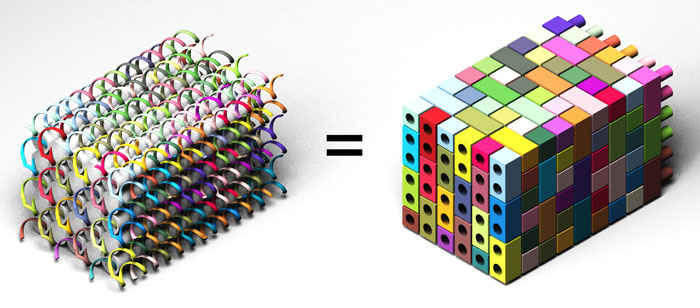
A new technique to make highly complex 3D nanostructures by assembling together synthetic DNA "bricks" has been developed by researchers at Harvard University in the US. The bricks, which are like tiny pieces of LEGO, can be assembled into a wide variety of shapes and configurations, meaning that they can be used to build elaborately designed nanostructures. The resulting structures might find use in a wide variety of applications, including smart medical devices for targeted drug delivery in the body, programmable imaging probes and even in the manufacture of speedier and more powerful computer-chip circuits. DNA nanotechnology has now been around for nearly 30 years, but it really took off with the advent of a technique called DNA "origami". This technique, named after the ancient Japanese art of paper folding and first developed in 2006 by Paul Rothemund at the California Institute of Technology, involves folding long strands of DNA into a wide range of predetermined shapes. The resulting nanostructures can be used as scaffolding or as miniature circuit boards for precisely assembling components such as carbon nanotubes and nanowires.

Powerful though it is for making both 2D and 3D shapes, DNA origami has its limitations. To fold the DNA, several hundred "staples" must be added to the regions surrounding the single DNA strands, and each type of new nanostructure desired requires a new set of staples. Moreover, the DNA structures tend to arrange themselves randomly onto a substrate surface, which makes it difficult to integrate them into electronic circuits afterwards.

Building bricks

A team led by Peng Yin at Harvard first put forward its DNA-brick self-assembly technique earlier this year. Rather than starting with long DNA strands, the researchers succeeded in interlocking short, synthetic strands of DNA together to make larger structures. In fact, they managed to arrange the short strands into a "molecular canvas" by controlling the local interactions between the strands. The technique, like any DNA self-assembly method, works by exploiting the fact that the four base pairs in DNA – adenosine, thymine, cytosine and guanine – are naturally programmed to join up in specific ways: A only binds to T, while C only binds to G. So, the team was able to fabricate a collection of 2D structures using its technique by stacking one DNA brick that was 42 bases long upon another brick.

3D shapes

Now, Yin and colleagues have extended their technique to 3D. The researchers begin with an even smaller DNA-brick strand – only 32 bases long – that contains four regions than can bind to four neighbouring DNA-brick strands. The bricks are connected through 90° and so can be built out in all three directions – up, down, and out – to create a solid "master" DNA molecular-canvas cube containing hundreds of bricks. Compared with hand-assembled LEGO structures, each DNA structure self-assembles thanks to the fact that every brick is encoded with an individual sequence that determines its final position in the nanostructure. Each sequence will only be attracted to one other complementary sequence, which means that specific shapes can be created through the selection of different sequences.

The biggest advantage of the new DNA-brick technique is that any number of structures can effortlessly be made from the same master cube by simply selecting subsets of specific DNA bricks, according to the team. "We have already made more than 100 different shapes in this way (with some containing intricate cavities, surface features and channels), all of which are more complex than any 3D DNA structure constructed in the last decade. What is more, additional DNA bricks can be added, removed or modified independently without affecting other parts of the structure," says Yin.

Complex structures

The researchers claim that the complex structures that can be made using their DNA-brick assembly technique will help advance existing DNA nanotechnology applications. "We can for example, arrange technologically relevant guest molecules into functional devices that might serve as programmable molecular probes, instruments for biological imaging and drug-delivery vehicles," Yin tells. "The structures can also be used to fabricate high-throughput complex inorganic devices for electronics and photonics applications."

The DNA-brick structures are also entirely synthetic, whereas DNA origami is half biological. This expands the range of potential applications even further, Yin adds. "For instance, by using synthetic polymers rather than the natural form of DNA, we might be able to create functional structures that are stable in a wider variety of different environments." The team is now busy improving its brick technique by looking more closely at DNA structure and sequence design, enzymatic synthesis for higher-quality strands and optimizing processing conditions. "We would also like to better understand the kinetic pathways involved in DNA assembly," says Yin.

Truant particles turn the screw on supersymmetry

Absence of evidence is not necessarily evidence of absence. That’s what theoretical physicist John Ellis of King’s College London says of the latest result in the search for supersymmetry, an idea that has captivated particle physicists for 30 years. Although researchers are still digesting the discovery of the Higgs boson, announced in July at CERN, Europe’s particle-physics laboratory near Geneva in Switzerland, more exotic creations are needed to fill out their picture of the subatomic world. The Higgs provides the last missing particle of the standard model of particle physics, but this theory still has some major deficiencies — it is silent on gravity and on what makes up dark matter, among other things. Supersymmetry (SUSY), which predicts that every standard-model particle has a heavier partner, is a step towards a more unified theory of the particles and forces.

Last week at a conference in Kyoto, Japan, physicists working on the LHCb experiment — one of four large detectors located around CERN’s Large Hadron Collider (LHC) — announced the hotly anticipated results of an indirect search for new superparticles, known by the cognoscenti as ‘sparticles’. The team clocked an extremely rare process in which a BS meson — composed of a strange quark and a bottom antiquark — decays into a muon–antimuon pair. Only one in roughly every 300 million BS mesons is predicted to do this, because the decay relies on a highly unlikely chain of events involving the fleeting appearance of virtual particles. But with the help of sparticles, the rate could increase by perhaps a factor of 100.

However, the LHCb team found that the BS behaves just as the standard model says it should, although further data are needed to confirm the measurement. Some members of the 800-strong collaboration proclaimed the result as “very damaging” for SUSY. But SUSY is a slippery animal — it introduces more than 100 new parameters into the standard model, all adjustable — and SUSY proponents don’t seem particularly worried. “To paraphrase Mark Twain, news of SUSY’s death has been greatly exaggerated,” says theoretical physicist and SUSY pioneer Savas Dimopoulos of Stanford University in California.

Nevertheless, the LHC has undoubtedly lengthened the odds of SUSY being correct, at least in its simplest, ‘natural’ incarnations. “Models of natural supersymmetry are looking increasingly hard to believe,” says Brian Feldstein of the Kavli Institute for the Physics and Mathematics of the Universe at the University of Tokyo. The LHCb result comes on top of tough direct constraints from the LHC’s larger ATLAS and CMS detectors. These have seen no sign of sparticles such as squarks and gluinos — nor of any particles outside the standard model. Updates from ATLAS and CMS, presented in Kyoto, continue to show that the lightest superparticles, if they exist, must have truly elephantine masses of more than 1 teraelectronvolt (TeV).

Studies of the Higgs boson itself are yielding mixed signals for SUSY-seekers. So far, rough measurements of CERN’s new boson — updated last week — suggest that it behaves just as the standard model predicts, with no hint that additional particles are influencing its behaviour. Yet the mass of the Higgs, 126 gigaelectronvolts (GeV), is pretty much what SUSY predicted, says Sven Heinemeyer at the Institute of Physics of Cantabria in Spain. “If it had been 140 GeV or more, the minimal supersymmetric standard model would have been dead without any possibility of resurrection,” he says. SUSY also predicts the existence of four further Higgs particles, at different masses, which have yet to be discovered. The next chance for some cheering news about SUSY will come in March, when physicists will present results encompassing much more of the data gathered by the LHC, which will continue to smash protons until 17 December. SUSY will probably then remain in limbo until early 2015, when the LHC will re-open for experiments after a long shutdown for maintenance, and will begin colliding protons at energies of 13 TeV. So far, the collider has operated at energies of up to only 8 TeV. The increase in energy will put discoveries of more massive particles within the LHC’s reach.

Yet sparticles with masses of several TeV or higher might be too heavy to be produced in the LHC or any other conceivable experiment — a troubling possibility. One of the main attractions of SUSY is that it solves a problem in the standard model, which predicts that the Higgs field — the constant sea of energy from which the Higgs boson arises — should be ramped up to ridiculously high values by the ever-present fluctuations of standard-model particles. SUSY’s sparticles are supposed to prevent that by cancelling out the fluctuations, thereby stabilizing the Higgs. But there is disagreement about whether superheavy sparticles can offer enough stabilization.

In another blow to SUSY’s explanatory power, such sparticles could also become too heavy to be convincing candidates for dark matter, the unseen stuff that astronomers believe has a key role in shaping cosmic structure. Fans of SUSY are likely to lose faith only if the LHC finds nothing after a year or two of high-energy running. That would force them to look for an even more audacious idea to break free from the standard model. Even so, SUSY will probably live on in mathematical physics, says theorist Ben Allanach of the University of Cambridge, UK. “It is such a powerful new mathematical symmetry that it would be a shame if nature didn’t make use of it,” he says.

لینک مقاله

Particle Physics with Ferroelectrics

انحراف توزیع بار الکترون‌ها از تقارن کاملاً کروی (به این معنا که الکترون گشتاور دوقطبی الکتریکی دارد)، می‌تواند نشانه‌ای از یک فیزیک جدیدی فرای مدل استاندارد ذرات فیریکی باشد. تاکنون بیشتر آزمایش‌های دقیقی که مورد مطالعه قرار گرفته است مربوط به الکترون‌های اتم‌هاو مولکول‌ها در یک پرتو است. اما به عنوانی جایگزینی برای این آزمایش‌ها منبع چگالتری از الکترون‌ها‌ی متصل به اتم‌ها در جامدات مورد مطالعه قرار می‌گیرد. در این مطالعات نشانه‌های بیشتری برای یک فیزیک جدید به چشم می‌خورد. طبق گزارشی در Physical Review Letter٬ پژوهش‌های حالت جامد برای گشتاور دوقطبی الکتریکی الکترون (EDM) هنوز ۵۰۰ بار دقیق‌تر از یافته‌های مربوط به فیزیک اتمی می‌باشد. اما پیشرفت آن‌ها در سال تنها سه برابر بوده است.

EDM الکترون‌ها٬ باید هم‌راستا با اسپین الکترون باشد. بنابراین به طور معمول در پژوهش‌های EDM در حالت جامد٬ در یک نمونه‌ی قرار گرفته شده در میدانِ الکتریکی تلاش می‌شود تا سیگنال‌های مغناطیسیِ القایی اندازه گیری شود. Stephen Eckel و همکارانش در دانشگاه یل در Connecticut این آزمایش را بر روی Eu0.5Ba0.5TiO3٬ سرامیکی با چگالش بالایی از اسپین‌های نامنظمِ جفت نشده و با پاسخ فروالکتریکی قابل تنظیم٬ انجام دادند. این به این معنا است که میدان الکتریکی خارجی حتی میدان الکتریکی درونی بزرگتری را برای اسپین‌ها بوجود می‌آورد. نویسندگان مقاله شکاف مغناطیسی دقیقی را بین دو دیسک Eu0.5Ba0.5TiO3با قطر ۱۲ میلیمتر و ضخامت ۱.۷ میلیمتر قرار دادند و مجموعه‌ای از پالس‌های میدان الکتریکی کوتاه را برای تنظیم سیگنال از EDM و حذف میدان‌های مزاحم اعمال کردند.

Eckel و همکارانش به این نتیجه رسیدند که اگر EDM غیر صفر باشد مقدارش می‌تواند بزرگتر از 6.06x10⁻²⁵ecm باشد. این مقدار در مقایسه با حدی که از اندازه‌گیری پرتو اتمی به‌دست می‌آید (1.05x10⁻²⁷ecm)٬ ممکن است همانند یک شکست در کارزاری برای یافته‌های حالت جامد باشد. اما کشف مواد جدید و اندازه‌گیری‌های با اختلال پایین‌تر همچنان عاملی برای تشویق به ادامه این نوع آزمایش‌ها است.

لینک منبع مقاله

Modeling Quantum Field Theory

در فضای تهی فوتون‌های مجازی دائماً افت و خیز می‌کنند. این فوتون‌ها به سرعت به وجود می‌آیند و به سرعت نابود می‌شوند. با اینکه فوتون‌های مجازی همواره در اطراف ما حضور دارند اما مستقیماً قابل رؤیت نمی‌باشند. با این حال در یک نوع محیط خاص با ناهمگونی‌های زمانی (فرکانس) و مکانی، این فوتون‌ها به کمک بعضی از اثرات به فوتون‌های حقیقی و قابل مشاهده تبدیل خواهند شد. گفتنی است که متأسفانه ساخت چنین محیط‌هایی بسیار دشوار است. به هر حال این چالش به کمک نوع خاصی از مادهٔ چگال (چگالش بوز-اینشتین) که ویژگی‌هایی مشابه با خلأ دارد مرتفع خواهد شد. جین کریستوف جاسکولا و همکارانش در مجله فیزیکال ریویو لِتِر از دانشگاه پاریس-سود (فرانسه) گزارش می‌دهند که با استفاده از چگالش بوز-اینشتین (به جای خلأ) در اثر دینامیک کازیمیر ذرات حقیقی تولید می‌کنند (شکل ۱ را ببینید). به علاوه از آنجا که در اثر کازیمیر  به جای خلأ از مادهٔ چگال استفاده می‌شود ذرات حقیقی مشاهده شده در واقع ناشی از افت و خیزهای گرمایی نسبت به افت و خیزهای کوانتومی خلأ می‌باشد.

Figure 1

پدیده‌ای که توسط جاسکولا و همکارانش مورد مطالعه قرار می‌گیرد قبلاً توسط انگِل و همکارانش بررسی شد با این تفاوت که تعبیر آنها کاملاً کلاسیکی بود، بدین شکل که از ذرات حقیقی تولید شده به عنوان امواج فاراده تعبیر می‌شد. اکنون جاسکولا و همکارانش نشان می‌دهند این امواج در فضای تکانه دو به دو با یکدیگر هم‌پوشانی دارند، از این رو بین تولید زوج در مکانیک کوانتومی و اثر دینامیک کازیمیر ارتباطی برقرار می‌کند. اثر دینامیک کازیمیر واقعی (یعنی به جای چگالش بوز-اینشتین خلأ کامل مد نظر باشد) در مرجع  بررسی شده‌ است. به هرحال چنین تمهیداتی برای تولید ذرات حقیقی به کمک تلاش‌های آزمایشگاهی نادر است. برای هر اثری (اثر دینامیک کازیمیر) انجام این گونه آزمایش‌ها دشوار است. حال چند نمونه را مرور کنیم.

در اثر شویینگر یک میدان الکتریکی همگن می‌تواند دو دسته از ذرات مجازی با بار مخالف را از هم جدا کند. میدان الکتریکی بایستی به اندازه کافی قوی باشد تا به ذرات شتابی به اندازه  ...  دهد. بنابراین برای تولید یک زوج الکترون-پوزیترون میدان الکتریکی مورد نیاز بایستی ۱۰۱۹ ولت بر متر باشد. این میدان به ذرات شتابی به اندازه  ۱۰۲۹ متر بر مجذور ثانیه می‌دهد. برای تصور، اگر این شتاب در چارچوب مرجع آزمایشگاهی حفظ شود در یک فاصله مشخص الکترون از حالت سکون به سرعت نور می‌رسد.

افقِ رویداد یک سیاه‌چاله نیز می‌تواند زوج‌های ذرات مجازی (فوتون‌ها) را به ذرات حقیقی تحت عنوان تابش هاوکینگ تبدیل کند. یک بخش زوج دارای انرژی منفی و دیگری دارای انرژی مثبت می‌باشد. درون افقِ رویداد فوتون‌های مجازی با انرژی مثبت و منفی به میزان بسیار انبوهی وجود دارند. فوتون‌های حقیقی تحت عنوان تابش هاوکینگ از سیاه‌چاله دور می‌شوند. متأسفانه این تابش بقدری ضعیف است که با تکنولوژی کنونی قابل رؤیت نمی‌باشد. البته گفتنی است که تولید سیاه‌چاله‌های کوچک به این موهم کمک خواهد کرد.

از سوی دیگر فوتون‌های مجازی می‌توانند بوسیله شتاب دادن آشکارساز فوتون‌ها، آشکارسازی شوند (اثر اونرو). در چارچوب مرجع آشکارساز، فوتون‌های مجازی خلأ به نظر می‌رسد توزیع گرمایی ناشی از فوتون‌های حقیقی باشند. به عبارت دیگر فوتون‌های مجازی از طریق اثر دوپلر به فوتون‌های حقیقی تبدیل می‌شوند.

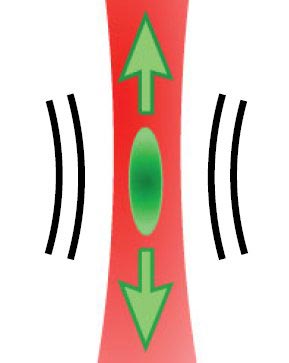
روش دیگری برای آشکارسازی فوتون‌های مجازی تغییر (سریع) طبیعت خلأ است. در اثر دینامیک کازیمیر یک تشدید کننده، طیف وسیعی از ویژه مدها دارد. این مدها توسط افت و خیزهای مجازی خلأ اشغال می‌شوند. یکی از این مدها در شکل ۱ نشان داده می شود که در آن ناگهان طول تشدید کننده به سرعت (در کسری از سرعت نور) تغییر می‌کند. این تغییر بقدری سریع است که فرآیند به شکل بی‌دررو صورت می‌گیرد. در این صورت جمعیت افت و خیزهای مجازی خلأ زیاد می‌شود. آنگاه جمعیت اضافی، فوتون‌های حقیقی و قابل مشاهده تولید می‌کند.

همانطور که می‌بینیم تبدیل فوتون‌های مجازی به فوتون‌های حقیقی و قابل مشاهده یک چالش بزرگ است. در همه موارد ذکر شده دست‌یابی به پارامترهای آزمایشگاهی مورد نیاز بسیار دشوار است. اما چه روی می‌داد اگر ما می‌توانستیم سرعت نور را با سرعت صوت جایگزین کنیم؟ در یک  چگالش بوز-اینشتین فونون‌ها می‌توانند نقش فوتون‌ها را بازی کنند، همچنین چگالش به تنهایی می‌تواند نقش خلأ کوانتومی را بازی کند. این همان ایده‌ای است که مبنی بر شباهت ماده چگال و خلأ ذکر شد. پیرو پیشنهاد کاروسوتو و همکارانش جاسکولا و همکارانش از یک چگالش بوز-اینشتین سیگاری شکل به عنوان یک تشدید کننده برای اثر دینامیک کازیمیر استفاده کردند.

در آزمایش جاسکولا و همکارانش نور لیزر کانونی شده روی چگالش بوز-اینشتین تابانده شد. اتم‌های تشکیل دهنده چگالش به نور روشن جذب شدند (همچون تجمع حشرات به اطراف لامپ). در یک آزمایش، نویسندگان مربوطه شدت نور لیزر را به طور ناگهانی تا دو برابرافزایش دادند (این کار موجب افزایش ناگهانی سرعت صوت در چگالش شد) و از طرف دیگر طول تشدید کننده را در زمان بسیار اندکی (شکل ۱ را ببینید) کاهش دادند. این فرآیند به تولید زوج فونون‌های با تکانه‌های مساوی (از لحاظ اندازه) و مخالف (از لحاظ جهت) منجر شد. در آزمایش بعدی شدت لیزر به طور سینوسی تنظیم شد (با تغییری در حدود ۱۰ درصد). این بار زوج‌های فونونی با فرکانسی معادل با نصف فرکانس اولیهٔ لیزر تولید شد. از این رو ارتباط بین اثر دینامیک کازیمیر و تبدیل پارامتریِ اپتیک غیر خطی اثبات می‌شود. مطالعه اثر دینامیک کازیمیر بخشی از تلاش ما می‌باشد تا خودمان را از این حیث که فضای تهی با فوتون‌های مجازی پر شده‌است، متقاعد کنیم. اگر فوتون‌ها واقعاً آنجا هستند، ما می‌خواهیم آن‌ها را در خلأ واقعی ببینیم، همچنین در یک چگالش بوز-اینشتین مشابه خلأ می‌خواهیم آن‌ها را آشکار سازی کنیم.

لینک منبع مقاله

BaBar makes first direct measurement of time-reversal violation

The BaBar collaboration has made the first direct observation of time-reversal (T) violation. The results are in agreement with the basic tenets of quantum field theory and reveal differences in the rates at which the quantum states of the B0 meson transform into one another. The researchers say that this measured lack of symmetry is statistically significant and consistent with indirect observations. The BaBar detector at the PEP-II facility at SLAC in California was designed to study the collisions of electrons and positrons and to determine the differences between matter and antimatter. In particular, physicists working on the experiment are interested in the violation of the charge–parity symmetry (or CP violation). Although the detector was decommissioned in the spring of 2008, data collected during the period of operation continue to be analysed.

Symmetries of the universe

Our current understanding of the universe suggests that it is governed by certain fundamental symmetries. One of these symmetries looks at the relation between charge (C), parity or "handedness" (P), and time (T) – meaning that if you apply a CPT transformation to a system, it shows no difference from the original system. However, physicists are constantly searching for any possible signs of CPT-violation, which could indicate the presence of new physics. In the realm of the weak force, however, instances of the breaking of individual symmetries have been observed in cases of parity inversion or a combination of parity inversion and charge conjugation (CP). Therefore, it was expected that these systems would also show asymmetries when time was reversed. That is, transformation from one state to another would occur at different rates when the process is reversed in time, thus showing a T-violation.

"While CP violation in the B sector is well established by both BaBar and Belle, all CPT-violation tests have always been consistent with zero," says Patrick Koppenburg, a physicist from the Dutch National Institute for Subatomic Physics (Nikhef), and a member of the LHCb collaboration at CERN. "So, the observation of T violation is not a surprise, but it still needed to be tested." Indeed, physicists have waited for nearly 50 years to make this direct observation since the discovery of CP violations in 1964. The discovery also comes 14 years after another experiment – the CPLEAR experiment – claimed to have the first experimental proof of the violation in 1998 but this claim proved controversial.

Probing the arrow of time

Electron–positron collisions inside BaBar are tuned to just the right energy for producing Υ(4S) mesons, which are composed of a bottom quark and its antiquark. These Υ particles swiftly decay into B mesons, such as the neutral B0 mesons used in this study. In 10 years, BaBar detected almost half a billion pairs of B and anti-B mesons. Since these pairs are created from the same Υ, they inherit their quantum numbers from the parent Υ. This "entanglement" of the two simultaneously produced B0 mesons is crucial to observing T violations. "Since the global quantum numbers of the B0-antiB0 system are fixed by the Υ(4S) decay, the state of the first B0 meson to decay – whatever it may be – dictates the state of the other B0 meson at that time, which itself decays after some time into another state," explains Fernando Martinez-Vidal, who is at the Institute for Particle Physics at the University of Valencia and Spain's National Research Council (CSIC), and is one of the physicists who worked on this study. "By appropriately choosing the states into which the first and second B0 mesons decay, we can prepare the processes to be studied and compared."

Forwards and backwards

In the world of quantum physics, the individual mesons can be expressed as superpositions, in terms of linear combinations of both B0 and anti-B0 flavour states. The transformations studied are the change of a B0 meson from a "flavour" state to a "linear-combination" state, and the time-reversed change from a "linear-combination" state to a "flavour" state. To begin with, the BaBar physicists identified the flavour of the first meson in the pair to decay (B0 or anti-B0) and used this information to "tag" the flavour of the second meson. Taking the instant this decay occurred as the starting time, they measured the time it took the second meson to transform into a linear-combination state. They then performed the measurement in reverse: if the first meson transforms into a linear-combination state, this information can be used to determine the linear-combination state of the second meson and measure the time taken for it to decay into a "flavour" state. Thus, by exchanging the initial and final states of the transformation, the physicists could see if there were any differences in the rates of each of these transformations. Unsurprisingly, they found the difference they were looking for, with a significance of 14σ – in particle-physics experiments, a significance of 5σ and above is considered a definite discovery. While BaBar may have gone silent nearly half a decade ago, hopefully more new results will emerge from the collected data.

سومین کنفرانس فیزیک ذرات و میدانها

سومین کنفرانس «فیزیک ذرات و میدان‌ها»ی انجمن فیزیک ایران روزهای ۸ و ۹ بهمن‌ماه ۱۳۹۱ در پژوهشگاه دانش‌های بنیادی برگزار می‌شود. در این کنفرانس تنها اعضای انجمن فیزیک امکان ثبت نام و ارسال مقاله را دارند.

علاقه مندان برای کسب اطلاعات بیشتر و ثبت نام میتوانند به آدرس Particles مراجعه نمایند.